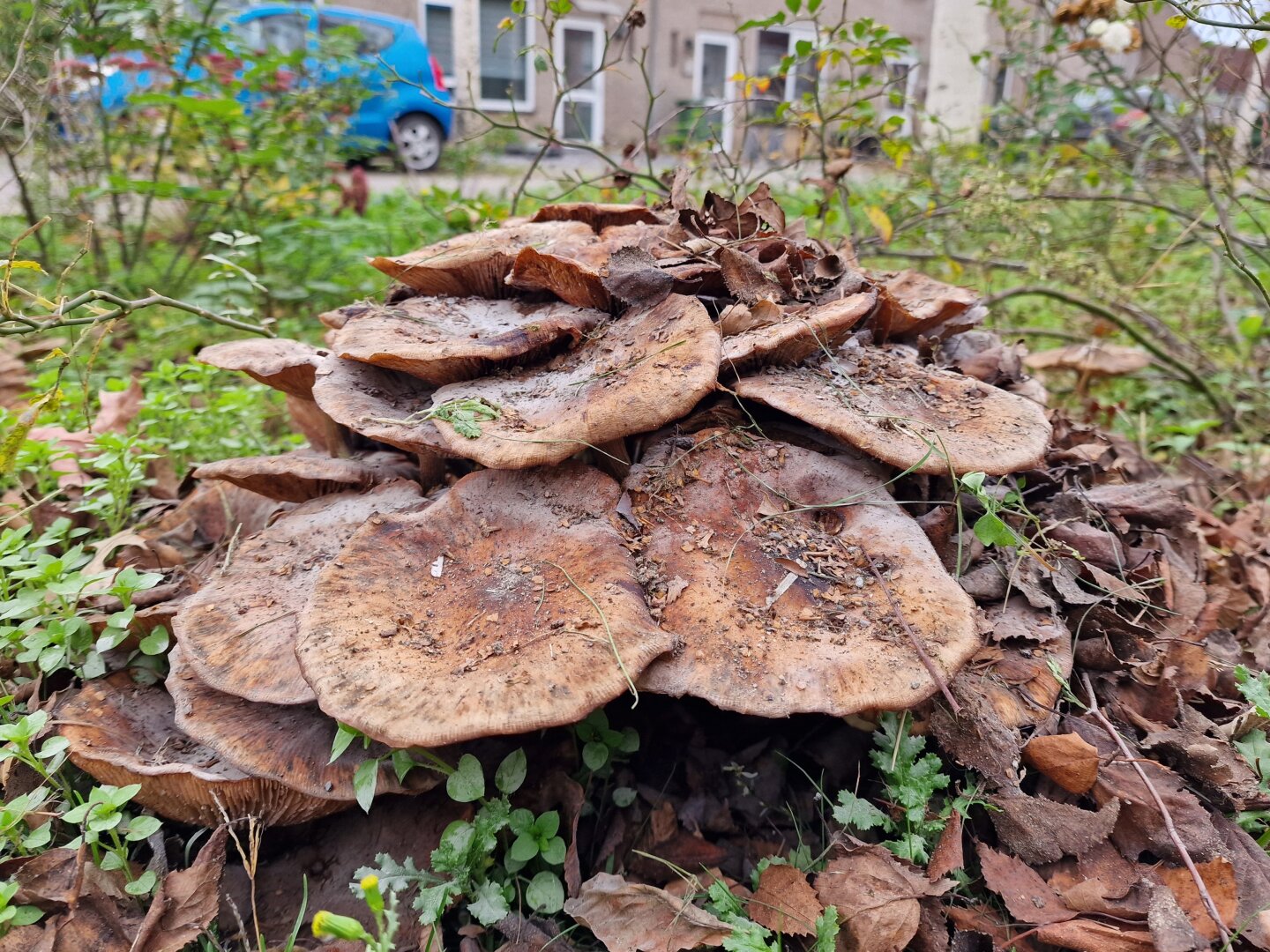
My entry for today for #FungusFriday. An older picture I took, and found when I ...
Cynni Pixy @PixysSnaps@pixelfed.social
My entry for today for #FungusFriday.
An older picture I took, and found when I was looking on my phone for (unshared) fungi snaps.
This cluster of mushrooms is highly likely to be a species of Honey Fungus (genus Armillaria).
Clustered Growth: They are growing in a dense, overlapping cluster (cespitose), which is a classic hallmark of Armillaria species.
Cap Appearance: The caps are mature, flattened, and exhibit a brownish-tan color. They also show fine, darker scales that are typically concentrated toward the center of the caps.
Environment: The cluster is growing from the ground among autumn leaves and garden weeds. Honey fungus is a white rot fungus that feeds on wood, so this cluster is almost certainly growing from buried dead roots or a decaying tree stump just beneath the soil surface.
#Fungi #Fungus #HoneyFungus #Armillaria #Nature