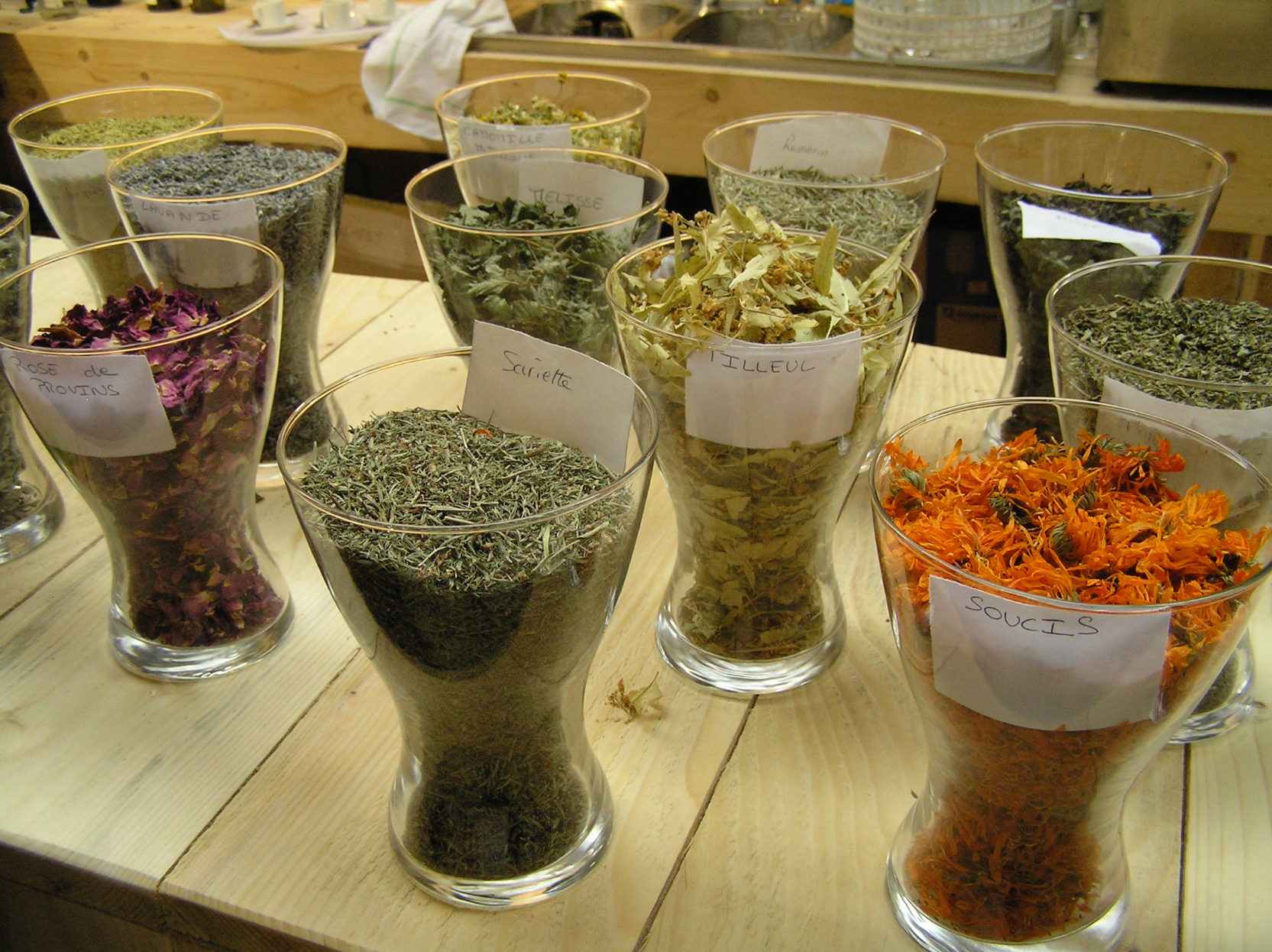
Let’s talk about tisanes—because I know many of you are curious about it. If you...
Chris Trottier @atomicpoet@atomicpoet.org
Let’s talk about tisanes—because I know many of you are curious about it.
If you’re unfamiliar with what a tisane is, it’s a beverage made from any plant other than the tea plant (Camellia sinensis). You might also know it as an “herbal tea”.
Now the reason I don’t refer to it as an “herbal tea” is because—by definition—a tisane does not contain tea. And I prefer being clear than confusing because actual tea is confusing as it is.
But there’s another big difference between tea and tisane: tisanes typically aren’t oxidized, whereas teas are. Green tea, white tea, black tea—that all refers to oxidation of the tea plant. Meanwhile, a chamomile isn’t oxidized—it’s just dried.
Now there are some exceptions to this. For generations, Russians have oxidized fireweed—to the point it can resemble tea. For this reason, it’s often referred to as “Ivan chai”. While it often tastes like tea, Ivan chai contains no caffeine.
On the extreme is Yaupon. This tisane does not taste like tea at all—even if you oxidize it. But it’s notable for being the only plant native to North America that contains caffeine.
Tisanes are often categorized into five categories:
- Floral. Made from blossoms and petals. Examples: chamomile, hibiscus, rose, and lavender.
- Leaf/Herb. Made from the leaves of non-tea plants. Examples: peppermint, lemongrass, lemon balm, and rooibos.
- Root/Bark. Made from the tougher parts of a plant, often requiring a longer boiling process to extract flavor. Examples: ginger, licorice root, chicory, and cinnamon.
- Fruit/berry. Made from dried fruits. Examples: rosehip, dried apple, and elderberry.
- Seed. Made from the pips, kernels, or seed pods of a plant. Examples: cardamom, fennel, coriander, and anise.
Now for the million dollar question: is coffee a tisane?
Yes and… maybe? Coffee can be a tisane if made from coffee leaves. Everyone agrees on this. I have some of this and it’s very delicious.
But coffee, the way you likely enjoy it—designating it as a tisane has proven to be controversial. Some people say coffee can’t be a tisane because it’s made from “beans”. But those beans are actually seeds, and seeds can be made into a tisane. See the fifth category.
So why is this even controversial? Because even though coffee is technically a tisane—a “herbal tea”, if you will—most people understand it to be an entirely separate culinary category. It may be a tisane, but the experience is drastically different.
You absolutely can put coffee in teabags, and I’ve actually seen this sold in stores. But usually it’s extracted using methods such as percolation, immersion, pressure brewing, or drip filtration
Which, funny enough, is what tea heads often say about tea itself. Sure, you can put tea in a teabag. But, believe it or not, most people in the world do not—teabags are a recent thing. Most people make tea loose leaf in a teapot or gaiwan or a basket. Or you drop it directly into a cup (grandpa style) or boil it in the kettle (grandma style).
What’s more, unlike most tisanes, boiling water often ruins tea. Especially green tea.
What’s my whole point here? A tisane is perhaps best understood not as “tea” or “anything infused with water”, but as a tradition. We’ve been infusing plants with hot water for eons. The ancient Egyptians, for example, were drinking chamomile.
Tisanes are connected to a whole foraging tradition. People often go out on hikes, pick up blackberry leaves, dandelion flowers, and ginger roots. They dry them out, infuse them with hot water, drink them as beverages.
And this is something that should be appreciated in its own right.
RE: https://atomicpoet.org/objects/2a371a1e-815f-4f11-88a4-e010a8c49f83