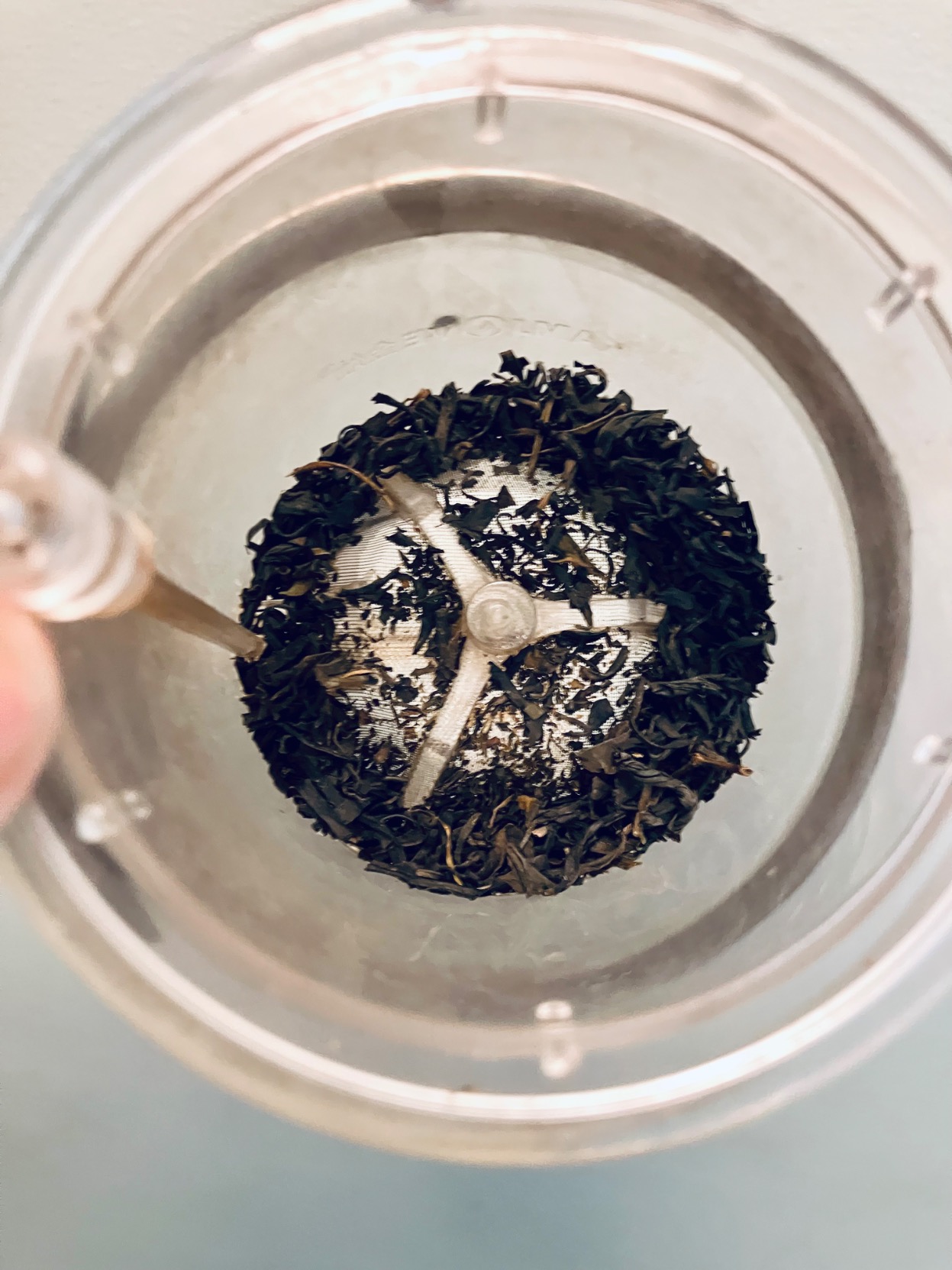
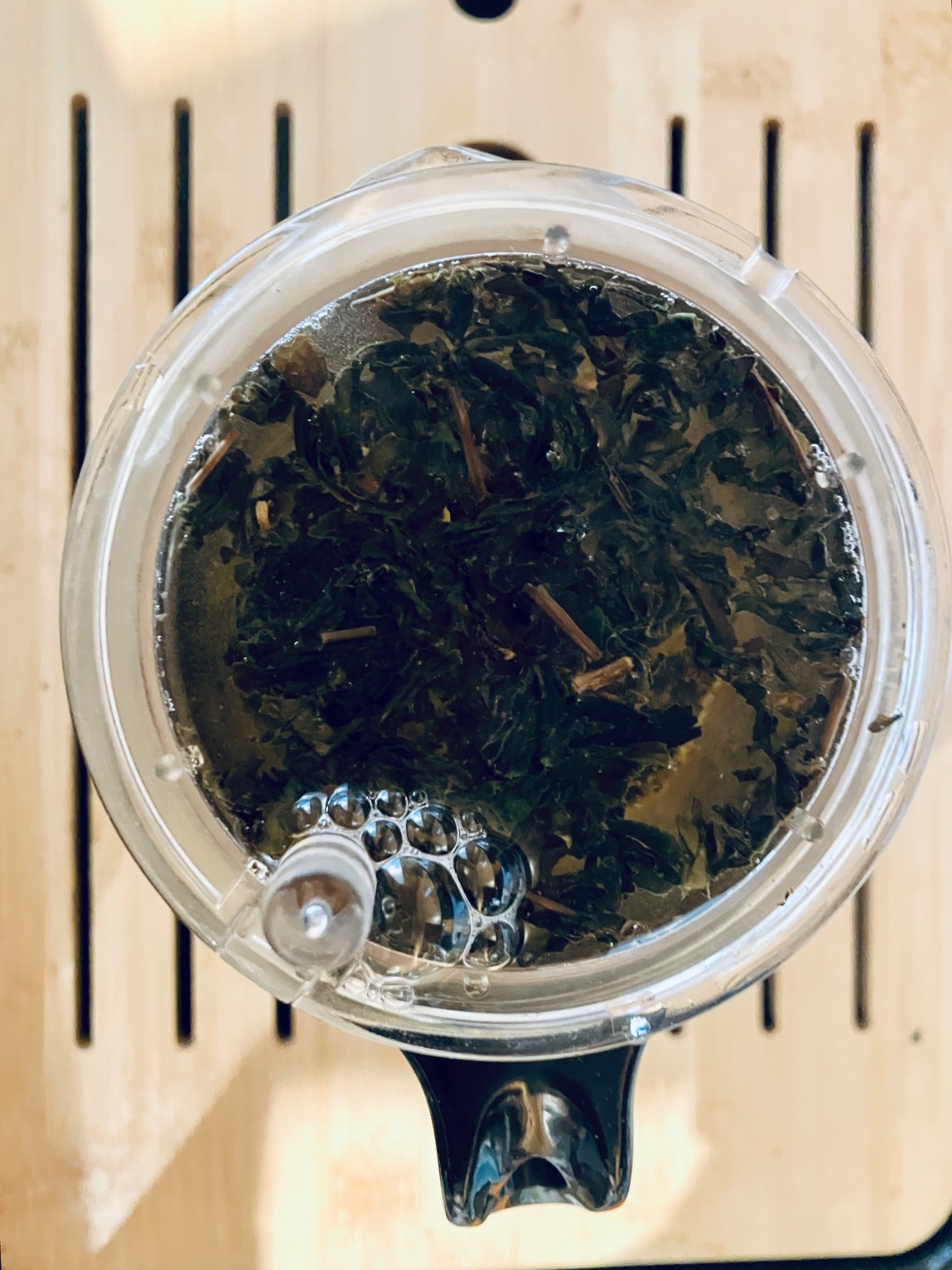
Volcanic Rock oolong tea took me the entire day to drink! In total, I had nine i...
Chris Trottier @atomicpoet@atomicpoet.org
Volcanic Rock oolong tea took me the entire day to drink!
In total, I had nine infusions. To the last steep, it still tastes amazing. And I quit simply because I have to draw the line somewhere.
So what do we got here? A legendary oolong. Truly one of the best I’ve ever had—and it’s Korean at that!
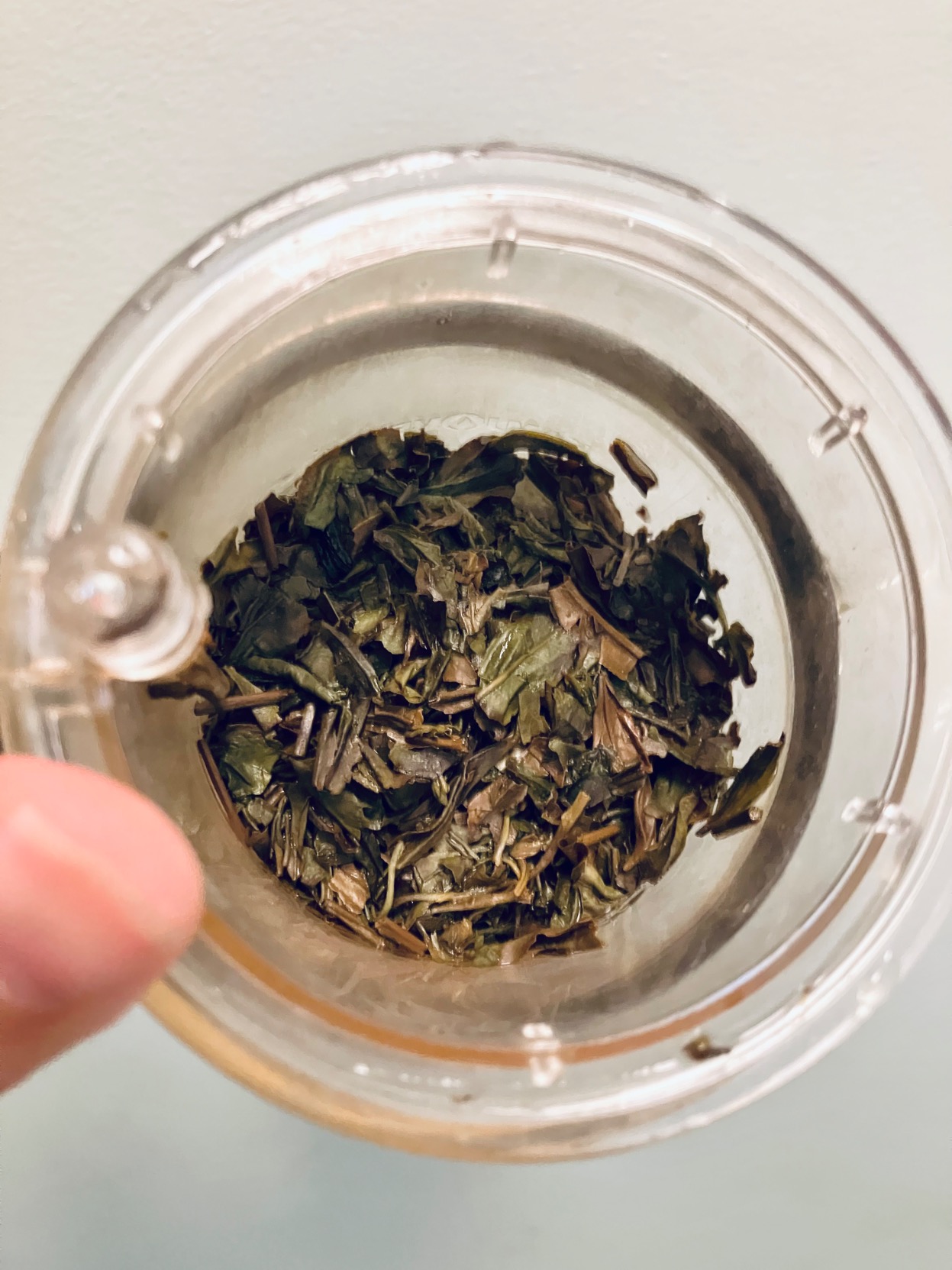
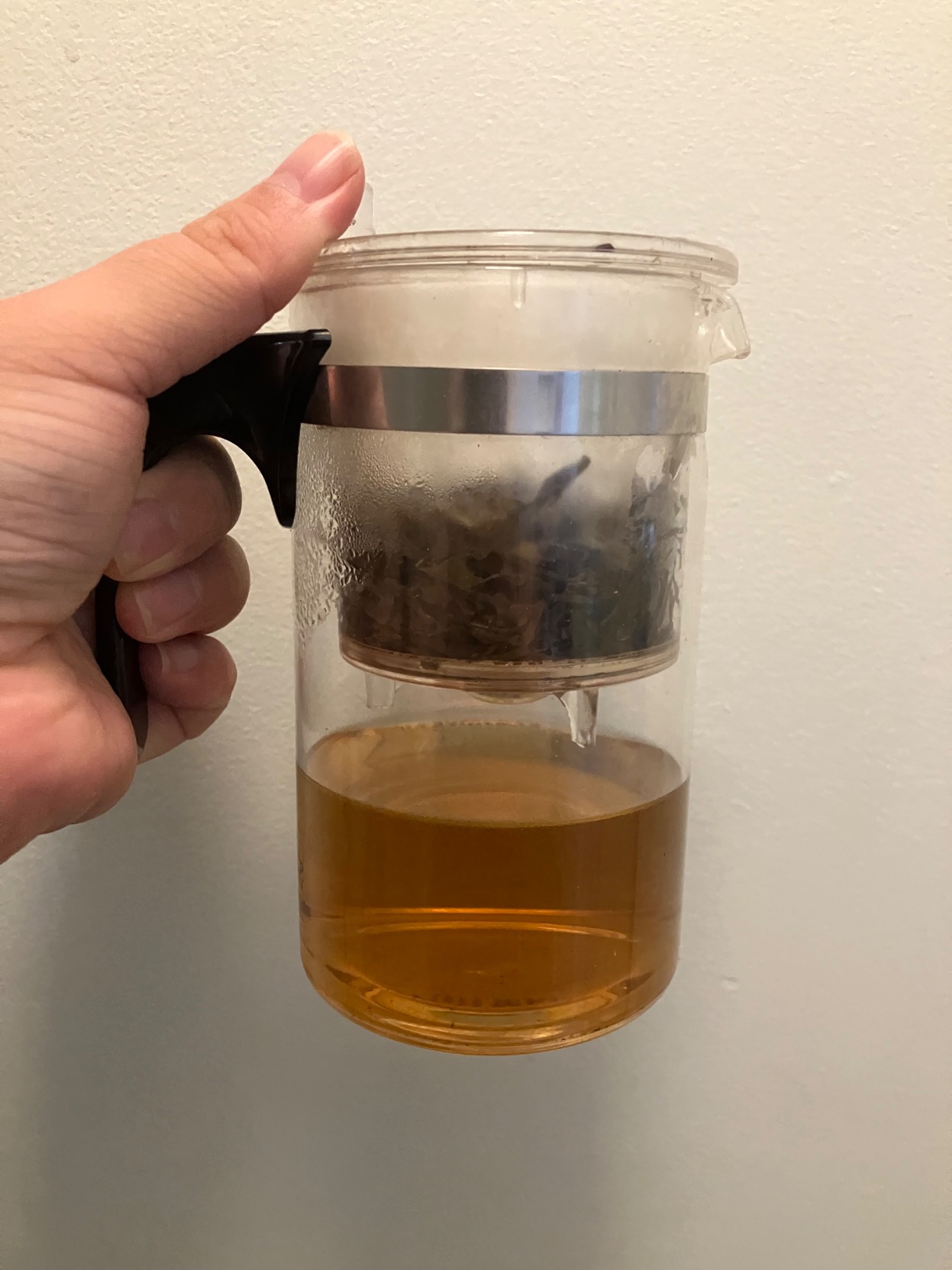
It’s also a beautiful tea. Looking at the leafs after infusion, I’m impressed by how they’re a gradient of green-to-brown. This is a hallmark of oolong’s processing where the leaves are purposely bruised to bring out the character. And the amber gold of the liquid is so pretty.
Unlike other rock oolongs I’ve had, this one tastes juicy and sweet. Yes, just like the tasting notes say, there’s hints of nuts. But there’s something else there—and it didn’t hit me until I let a Chinese tea enthusiast at my local racquets club try it: this Korean tea tastes like Korean ginseng.
By God, he’s right!
Of course, this isn’t ginseng. And thank God because ginseng can be overwhelming. But the resemblance is uncanny.
But I have to say something about the brewing. I followed the instructions on the box for the first cup: two teaspoons of leaves in a 300mL pot, add water that’s heated to 90°C, steep for two minutes.
And it wasn’t very good. No, not at all. it was dull and lacked brightness.
Once I did it the gongfu way by increasing the leaves, decreasing the size of the teapot, and lowering the steeping time—that’s when this all came alive.
This tells you once again that—most of the time—the Chinese method of tea brewing is superior and brings out the best flavour for orthodox tea leaves. I not only find this true for Chinese tea, but also Indian, Ceylon, Japanese, Nepali, Kenyan, Taiwanese, and now Korean teas.
And what’s more, you can get so much more out of the leaves this way. Let me emphasize this—5g got me 9 infusions and lasted me an entire day. And even then, I could have had more.
Now the reason I’m mentioning this is because, by weight, Volcanic Rock is perhaps the most expensive tea I’ve ever bought. The price was ₩35,000 for 25g. That’s almost $1 per gram. And to put that into perspective, most teabags contain 2g of tea. Which means, if this were brewed from a teabag, one cup would cost me $2.00.
Yet, going gongfu lowered the price to $0.56 per cup. And on top of that, it yielded a superior brew. So yeah, this isn’t just a matter of taste but of value too.
One further thought. The past two days have given me truly memorable tea, some of the best I’ve ever tasted. And it’s going to be really hard for me to try a boring, pedestrian tea. But I’m going to try because sometimes boring teas end up being something special if you make them just right.
RE: https://atomicpoet.org/objects/342640b0-3397-481c-a851-7770b1fc68dd