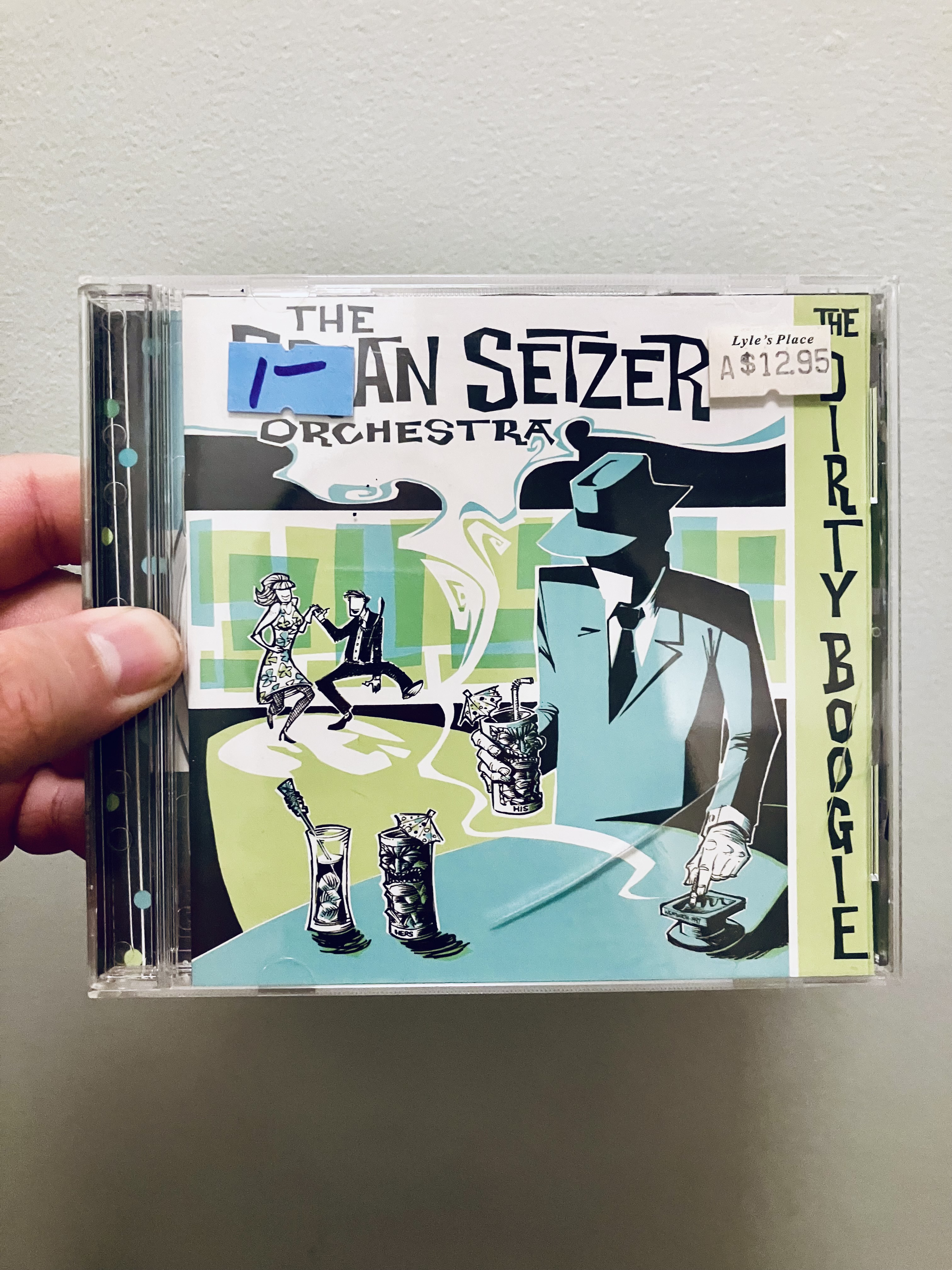
I was WRONG about this album. I thought Brian Setzer ditched rockabilly, smelled...
Chris Trottier @atomicpoet@atomicpoet.org
I was WRONG about this album.
I thought Brian Setzer ditched rockabilly, smelled money in the swing revival, slicked back the hair and jumped aboard.
Then I found The Dirty Boogie for a buck at a thrift store.
Curiosity got me.
And damn, this thing swings—but it still has rockabilly blood all over it.
That guitar is the giveaway. Setzer doesn’t disappear inside the horns. He cuts straight through them. Big band brass on one side, Gretsch guitar snarling on the other.
This isn’t generic swing revival stuff at all. Instead, it’s rockabilly and swing getting shoved into a hot rod.
And Setzer wasn’t even chasing the trend. The Brian Setzer Orchestra started in 1992, when grunge was busy eating everything alive and swing wasn’t even a blip on the road map. The Dirty Boogie was already their third album.
Then “Jump Jive an’ Wail” hit.
It was on a Gap commercial. Then hit MTV. Suddenly everybody knew there were people out there wearing suits, throwing each other across dance floors.
The album hit No. 9 in the U.S. Billboard 200. Went 2x platinum. That’s a bona fide hit.
Jazz purists hated this stuff. Too slick. Too much pastiche. Too much punk stink around the edges.
Fine, but that punk stink is part of why I like it.
You see, underneath all the revival clothes, you can hear something older crawling around. Rock and jazz were never actually strangers. Which might sound obvious but isn’t.
When I was a kid, rock was presented like it fell from the sky and murdered everything before it.
Nope. If you go back and look at the pop music of the late 40s and early 50s, something unique stands out: Texas swing.
A genre that was pretty much country and jazz rubbing against each. And this was years before rockabilly showed up.
Put on Bob Wills, then put on Brian Setzer. Decades removed but there’s family blood there.
That’s what finally got me about The Dirty Boogie. Setzer wasn’t cashing in on a trend.
Instead, for a short while, he dragged an old sound back into the light and sold a gazillion records in the process.