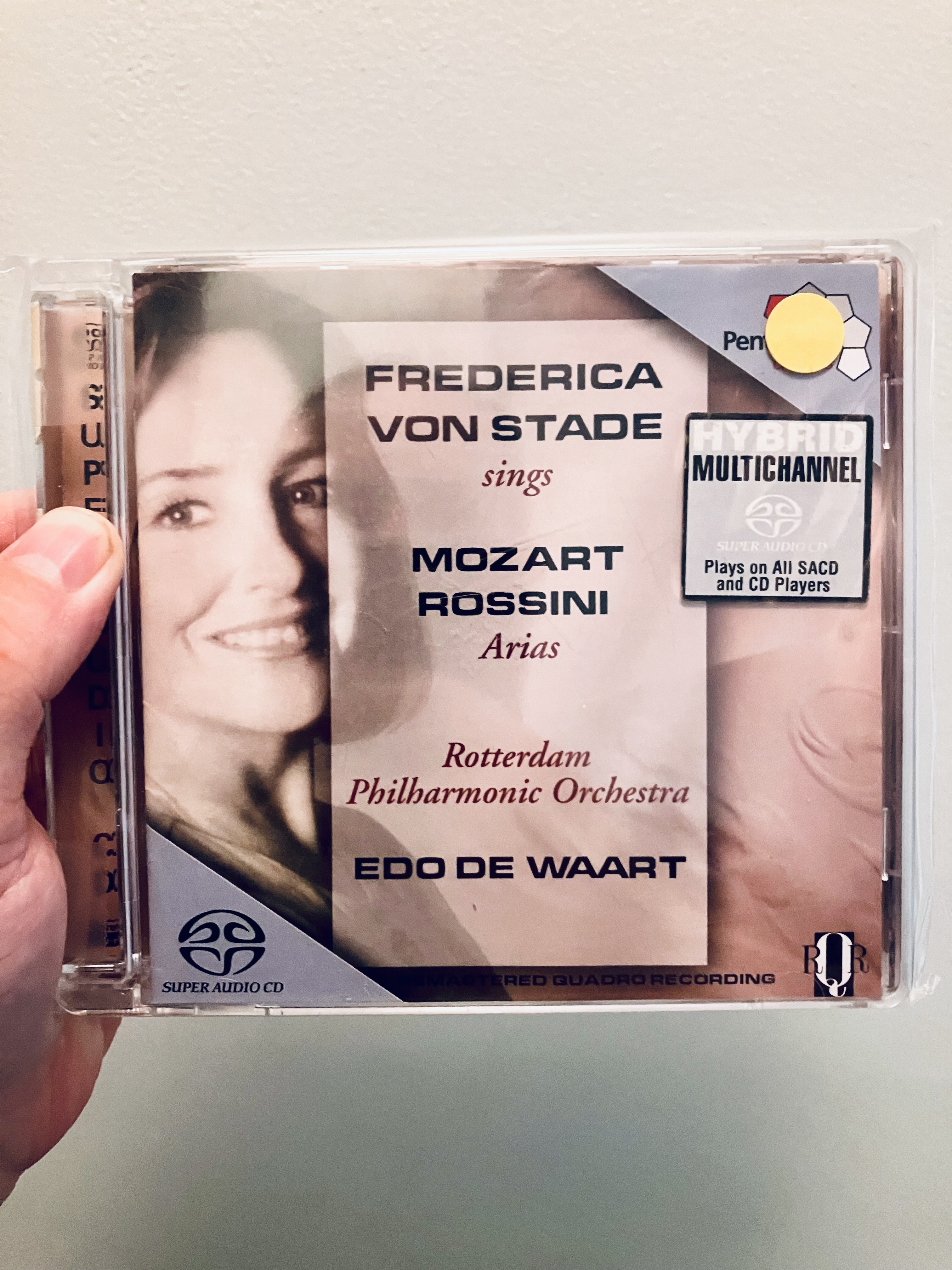
This may be the greatest “failed” music format ever made. Because the damn thing...
Chris Trottier @atomicpoet@atomicpoet.org
This may be the greatest “failed” music format ever made.
Because the damn thing REFUSED TO DIE.
SACD, or Super Audio CD.
Sony and Philips kicked it loose in 1999, everybody waited for it to conquer the world, and it never did.
Except here we are more than 25 years later and they’re STILL pressing the things.
Why?
Because SACD has some serious guts.
First, it can carry 5.1 surround sound. Fine. DVD-Audio could do that too.
But SACD has another animal crawling around inside it: DSD, which stands for Direct Stream Digital.
Normal CD audio uses PCM: 16-bit samples taken 44,100 times every second.
DSD64 goes completely nuts: 1-bit but at 2.8224 million samples every second.
That screaming-high sample rate, combined with noise shaping, shoves most of the quantization noise way above the frequencies your ears care about.
And when you feed the right music through it?
WHAM.
Stereo is nice. But give me multichannel SACD with acoustic instruments and human voices and NOW I understand why this format exists.
Classical music is where the beast really wakes up. Mozart, Rossini, symphony orchestras, and opera.
You’re sitting there alone and suddenly the room has PEOPLE in it.
Strings don’t just come out of 2 boxes in front of you. They spread about. A voice has lungs behind it. The orchestra can go from a little scrape of bow on string to the whole damn room coming alive.
It feels like you crawled inside the performance.
And here’s a wild little secret: you may already own something that plays SACDs.
A surprising number of Sony disc players support them, including several Blu-ray and 4K Blu-ray models. Check the specs before buying anything, hook a compatible player into a surround system, and feed the machine a multichannel SACD.
And new SACDs still exist.
It’s mostly classical, jazz, folk. Quite often acoustic music. Exactly the stuff where room sound, breath, decay, and dynamics have somewhere to squirm around.
I like SACD so much that I’d put it up against high-speed reel-to-reel tape. Yeah, I said it.
Reel-to-reel sounds gorgeous, but it’s a needy old monster. Tape wears. Machines need maintenance. Heads need cleaning. Alignment and storage especially matters.
But with SACD? You just put it in and hit play—just like most optical media.
And properly stored optical media can sit there for decades without asking you to oil anything. That’s the beauty of the format.
SACD gives me some of the things I love about analog—the space, the air, the little physical noises around instruments—without making me babysit a machine full of motors and magnetic tape.
And DSD never disappeared either. There are still engineers, labels, and musicians recording and releasing music in it.
So SACD failed? Sure. It failed to become the next CD. It certainly didn’t take over every living room. And it didn’t murder DVD-Audio and plant its flag on the corpse.
But is it dead?
HELL NO.
Yes, they’re rare relative to vinyl and CD. But you can still buy them new and spin them up.