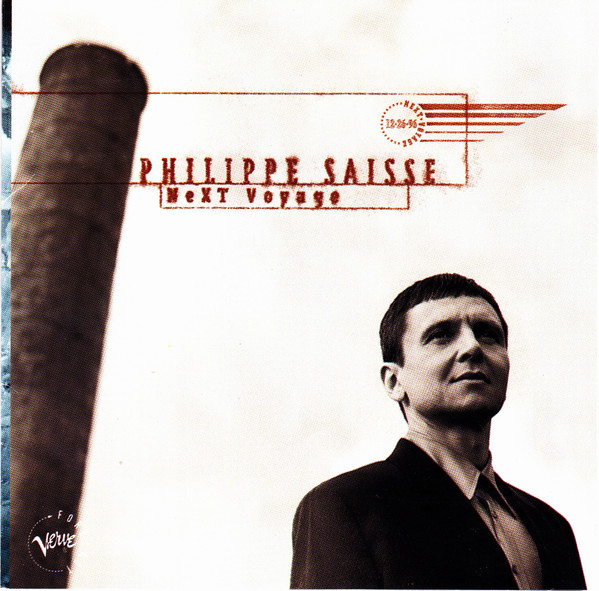
Next Voyage – Philippe Saisson 1997 • Smooth jazz • Verve Forecast Apple Music L...
Chris Trottier @atomicpoet@atomicpoet.org
Next Voyage – Philippe Saisson
1997 • Smooth jazz • Verve Forecast
Apple Music Lossless
If there’s anybody with a good reason to hate smooth jazz, it’s me.
I spent a good chunk of the early 2000s being forced to listen to the local smooth jazz station at work. Every day. Eight hours a day.
It was oppressive.
It made me RAGE.
But as I got older, I started coming around to smooth jazz. Not completely. But once you remove the dick boss and eight-hour workday from the equation, I can actually hear the stuff on its own merits.
Vaporwave was what first got me digging around in it again. Vaporwave loves sampling smooth jazz, and I realized that when you slow this stuff down, chop it up, and warp it, it can sound pretty damn good. Then I discovered just how good Grover Washington Jr. and George Benson could be.
Yeah. When smooth jazz is good, it’s very good.
Which brings me to Philippe Saisse, somebody I highly respect. The guy has played keyboards on some legendary albums: Scary Monsters (and Super Creeps) by David Bowie, Dirty Work by The Rolling Stones, and I Feel for You by Chaka Khan.
And his heart is firmly in jazz. His solo work is well-regarded. His later album At World’s Edge was even nominated for a Grammy Award for Best Contemporary Jazz Album.
But Next Voyage?
Oh yeah, this is SMOOTH JAZZ.
I’m not going to pretend otherwise. This is dinner party music. Music for people who don’t like music to leave bubbling away in the background while demonstrating to their suburban friends that they are sophisticates.
I mostly don’t like it.
But I understand what Saisse was trying to do. He was taking radio-friendly smooth jazz and trying to push it somewhere more challenging. Underneath that super-shiny production, he brings in hip hop beats and turntable scratches.
And then there’s “Miracle.” Easily the best track on the album.
It features slam poet D-Knowledge speaking about heavy subjects, including racism. You want challenging smooth jazz? HERE IT IS. I can practically hear my old smooth jazz-loving boss getting pissed off.
And in a way, Next Voyage was ahead of its time. Decades later, LoFi hip hop beats would take off and occupy the same kind of niche that smooth jazz once filled.
But ultimately, Next Voyage misses for me.
The killer is the production. Too slick and perfect and sanitized.
What excites me about jazz is the rawness of improvisation. Here, everything feels too calculated. Meanwhile, LoFi hip hop beats became popular while doing the opposite: embracing imperfection.
That’s what makes Next Voyage frustrating. It’s ambitious. And there’s nothing I like more than ambition.
But it swings.
And it misses.