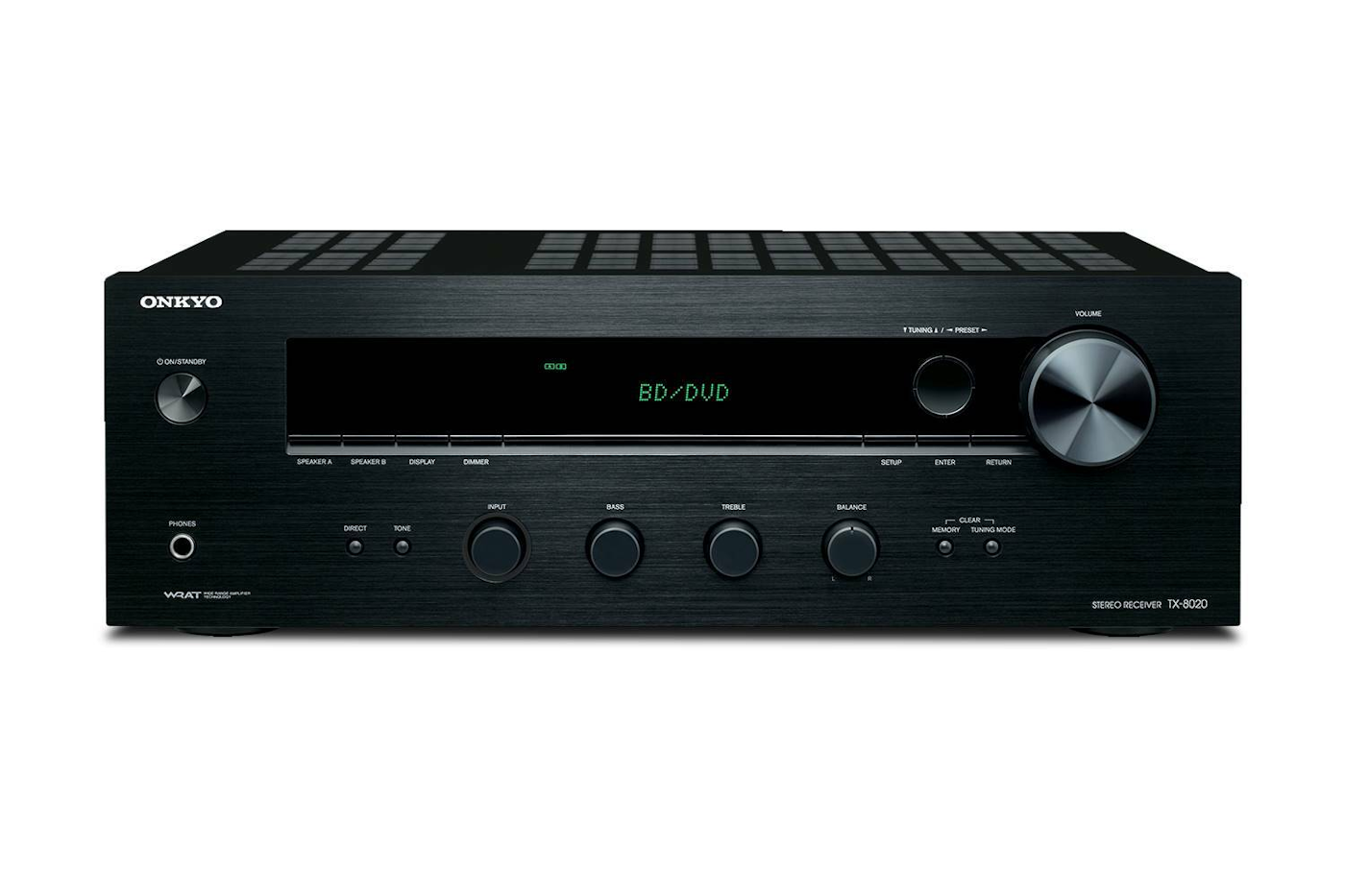
I have an Onkyo TX-8020 stereo receiver. Bought it brand new in 2014 for C$200. ...
Chris Trottier @atomicpoet@atomicpoet.org
I have an Onkyo TX-8020 stereo receiver. Bought it brand new in 2014 for C$200.
Why so cheap? Because in 2014, nobody gave a damn about new stereo receivers. Manufacturers were chasing home theatre, which meant 5.1 channels at a minimum. And the TX-8020 didn’t even have Bluetooth.
But it had four things I wanted.
First, a built-in grounded phono preamp. That was an absolute must because I had no interest in buying another box just to use a turntable. 12 years later, I still don’t use an external preamp. The Onkyo does the job. Leave it alone.
Second, RCA output for tape recording. I wanted to record a lot of stuff, and I sure as hell wasn’t going to do it through some crappy boombox.
Third, support for Onkyo’s Wireless AirPlay RI Dock. Back in 2014, that meant I could plug in an iPod or iPhone and wirelessly stream music from a MacBook. That mattered a LOT more then, and it was a big reason I didn’t care about Bluetooth.
These days, I use that dock input for a dedicated external DAC with Bluetooth, hooked up to my Linux PC. Problem solved.
But the most important feature was the subwoofer output.
It’s a single mono analog RCA preamp output: an unamplified connection made specifically for a powered subwoofer.
And I NEED that because I use bookshelf speakers.
My music room is a bedroom. I can’t stuff a pair of towers in there unless I want my wife getting annoyed real fast. The bookshelf speakers are already plenty loud. Their one weakness is bass.
Add a dedicated subwoofer?
No problem anymore.
Every once in a while I look at the TX-8020 and think, “This thing only has 50 watts. Maybe I should upgrade.”
Then I remember what those 50 watts are already doing.
This receiver has six devices hanging off it. Even a reel-to-reel tape deck from 1968.
There is one thing about the TX-8020 that drives me nuts. If there’s no sound, the amp automatically shuts itself off. Nice for saving power. Terrible when you’re trying to record something. So I have to pull a little trickery to make it behave the way I want.
USB output would’ve been nice too. But plenty of other gear handles that now. My Sony turntable does it. RCA-to-USB cables are everywhere.
People sometimes ask why I don’t just get some vintage solid-state receiver instead.
Simple.
I like how the TX-8020 sounds.
It has this soft tone with plenty of detail. It’s clear accurate, has excellent bass. And absolutely no noise.
Let’s be honest: this budget receiver blows away plenty of HiFi receivers from the ’60s, ’70s, and ’80s. Technology moved on. Stuff that once cost a fortune can now be had for pennies on the dollar.
If I upgraded, I’d have to spend north of $1,000 before I thought it was worth the trouble.
And I’m not sure my wife would be thrilled about that either.
You don’t buy HiFi in a vacuum. Other people have to live with the damn thing.
Which is why, 12 years later, the Onkyo TX-8020 is still sitting there doing its job.