This will be a long post. If it’s too much reading for you, I understand. But I ...
Chris Trottier @atomicpoet@atomicpoet.org
This will be a long post. If it’s too much reading for you, I understand. But I have to get this off my chest.
When I was a kid, music wasn’t as accessible as it is now. Any kind of underground act had to be found either by sibling or friend handing you a mixtape, listening to college or public radio and recording it, reading a dog-eared fanzine, or blind buying an album at your local record store and hoping it wasn’t a dud.
Now to be sure, this wasn’t a bad way to discover music. It just took a lot of effort. And you had better know someone who had good taste.
Back in the 90s, the most underground it ever got for me was with punk bands that had already been around for 10 years: Black Flag, Minor Threat, DOA. That was fine, but it wasn’t current.
And okay, I got to see Nickelback when they were up-and-coming. Believe it or not, back in 1996, they were an underground act. But let’s face it, post-grunge was never exactly exploring new territory.
By the time I was a teenager in the late 90s, I was thirsty for something especially off the beaten path: horn skronk, static noise, off-tune singing. Anything that would annoy my parents so I could remind them they were old and their ears couldn’t handle anything this forward-thinking.
At this point, broadband Internet arrived at my home. So I was now hearing stuff that wouldn’t be stocked in my local HMV: Lou Reed’s Metal Machine Music, Throbbing Gristle’s 20 Jazz Funk Greats, James Chance & The Contortions’ Buy.
But even though all this stuff sounded cutting edge to me, it really wasn’t. It was all made in the 70s, far away from the 90s. And it seemed like nothing current had that attitude.
As luck would have it, though, it seemed like the zeitgeist was in tune with me because quite soon, there was a new scene that was just making waves in New York.
Now the wonderful thing about the emerging Internet was that suddenly you could hear about anything new on the come-up. Suddenly, a teenage boy in Vancouver could finally hear people talk about things in New York as they were happening.
And I heard about a little venue in Manhattan’s meat packing district, a place that used to store meat, which became an incubator for free jazz, noise rock, and experimental electronic music. This place was called The Cooler.
I kept my eyes peeled on what happened there, tracked their bills, because it seemed like every band that played there would be huge.
Which would end up to be true. Autechre played there in 1994, Godspeed You! Black Emperor in 1998, and The Strokes in 2000. All while they were obscure acts, before they got recognition.
In 1997, there was a free jazz group from Washington DC called Ayler’s Angels played The Cooler. They were obscure, and the more obscure something was, the more I wanted to know about it.
I discovered Ayler’s Angels put out an album with Fake Hand called Frozen Hammer Vs. Ancient Axe. But sadly, i couldn’t hear it. The Internet was great for discovery, but Napster hadn’t made it big yet.
Well, the more I followed this new cutting edge New York music scene, the more I saw it was coupled with the art and fashion scene. Folks like Ryan McGinley, Dash Snow, and Cheryl Dunn.
Whole publications started documenting it: Purple, Dazed & Confused, Paper. So compelling was this scene, Vice moved from Montreal to New York in 1999.
For a teenager stuck in a podunk Canadian town, it was frustrating beyond hell to read about history being made while forced to live on the other side of the continent. Yet I kept reading, hoping that some day I could make my way over there.
It was at this point that Ayler’s Angels transformed in A.R.E. Weapons. And they became central to what is now known as indie sleaze. In many ways, they’re the seminal indie sleaze band.
At the time, indie sleaze wasn’t a genre. But if you look at publications and posts from the later 90s and early 2000s, the word that kept being used to describe them was “sleazy”.
In 2001, this is how Drowned In Sound described their first single “Street Gang”:
“A.R.E Weapons are the latest trendy New York dolls to infortrate our headspace with their articulate brand of sleeze and slur.”
https://www.drownedinsound.org/archive-single-review-a-r-e-weapons-street-gang-1729/
Other publications followed suit. Cleveland Scene called them “sleazy and busted” and Ink 19 agreed they were “pure sleaze”.
And while A.R.E. Weapons definitely had a following—I was among their ranks—there was many in the music industry who absolutely hated them.
A big reason for this was due to keyboardist Paul Sevigny, brother of Chloë Sevigny, and nightclub impresario.
(And by the way, Chloë Sevigny was dating fellow A.R.E. Weapons bassist Matt McAuley, and this fact became contentious in a Gawker interview when the Brown Bunny was brought up.)
Critics already hated Paul Sevigny before he joined A.R.E. Weapons. Gavin McInnes declared him the world’s worst DJ. But, in Paul’s defence, he called Gavin’s house and challenged him to a fight. Gavin cowardly declined—fitting for the man who later founded the Proud Boys.
Tricia Romano also hated Paul. She said she hated the band prior to watching them simply because Paul was in it. And she hated them even more when singer Brain McPeck accidentally dropped a microphone stand on her head.
Beyond Paul, the press hated A.R.E. Weapons because it was thought they were privileged white kids romanticizing poverty, violence, and drugs. They looked at the celebrity connections, and simply thought they were pretending.
The other complaint was that they were more style over substance. Gavin McInnes said as much in NME when he called them “a magazine band”.
But who hated them the most? Probably Rough Trade, their label.
A.R.E. Weapons finished their debut album in 2002. Rough Trade let the band know that they weren’t happy, demanded changes. When the band refused, the label sat on the album for an entire year before releasing it in 2003.
Was Rough Trade right? Well, critics were divided. Pitchfork infamously gave the album a 1.5/10. Ink 19, though, said it was The Album of the Year.
Personally, I’m on the fence. “Don’t Be Scared” is definitely one of the greatest anthems of the 2000s. And “Black Mercedes” is an absolute hidden gem. But as an album? Their self-titled debut is uneven and lacks cohesion.
But tragedy struck. In 2004, guitarist Ryan Noel died from a heroin overdose. This fundamentally changed the band. And this is the moment all the irony, all the humour, all the silliness went out the window.
So they abandoned the drum machines and got a real drummer. And in a way, this is hilarious because their friend James Murphy alludes to something similar in the LCD Soundsystem song “Losing My Edge”.
Nevertheless, when A.R.E. Weapons released their follow-up Free in the Streets, they were essentially a different band.
And critics hated this album even more. They hated the lack of irony, the earnestness, the fact this band was no longer the sleazy hipsters they once were. That the stupidity was done.
Ironically, Pitchfork was more sympathetic. They noted that the music was kinder, gentler… weirdly sincere. And they speculated Ryan’s death may have played a role in their changing sound. Then they made a mention of Chloë Sevigny’s role in The Brown Bunny and awarded the album a 6/10.
In my view, Free in the Streets was the worst A.R.E. Weapons album. Sure, they were earnest. But none of their songs stood out, and the production job wasn’t helping. It was a loud, noisy affair with little in the way of dynamic range. So while it’s true that there was much more humanity on this album, it wound up feeling monotonous.
At this point, I was ready to give up on A.R.E. Weapons. And actually, most people did. This was the last album where they ever hit anything resembling the mainstream.
But then a funny thing happened.
A.R.E. Weapons got good.
It’s actually quite ironic. The moment indie sleaze started catching fire, when every college campus featured hipsters who were donning trucker hats and American apparel, reading Vice, smoking American Spirits, sporting an “ironic” moustache—a general aesthetic A.R.E. Weapons helped pioneer—they were completely invisible.
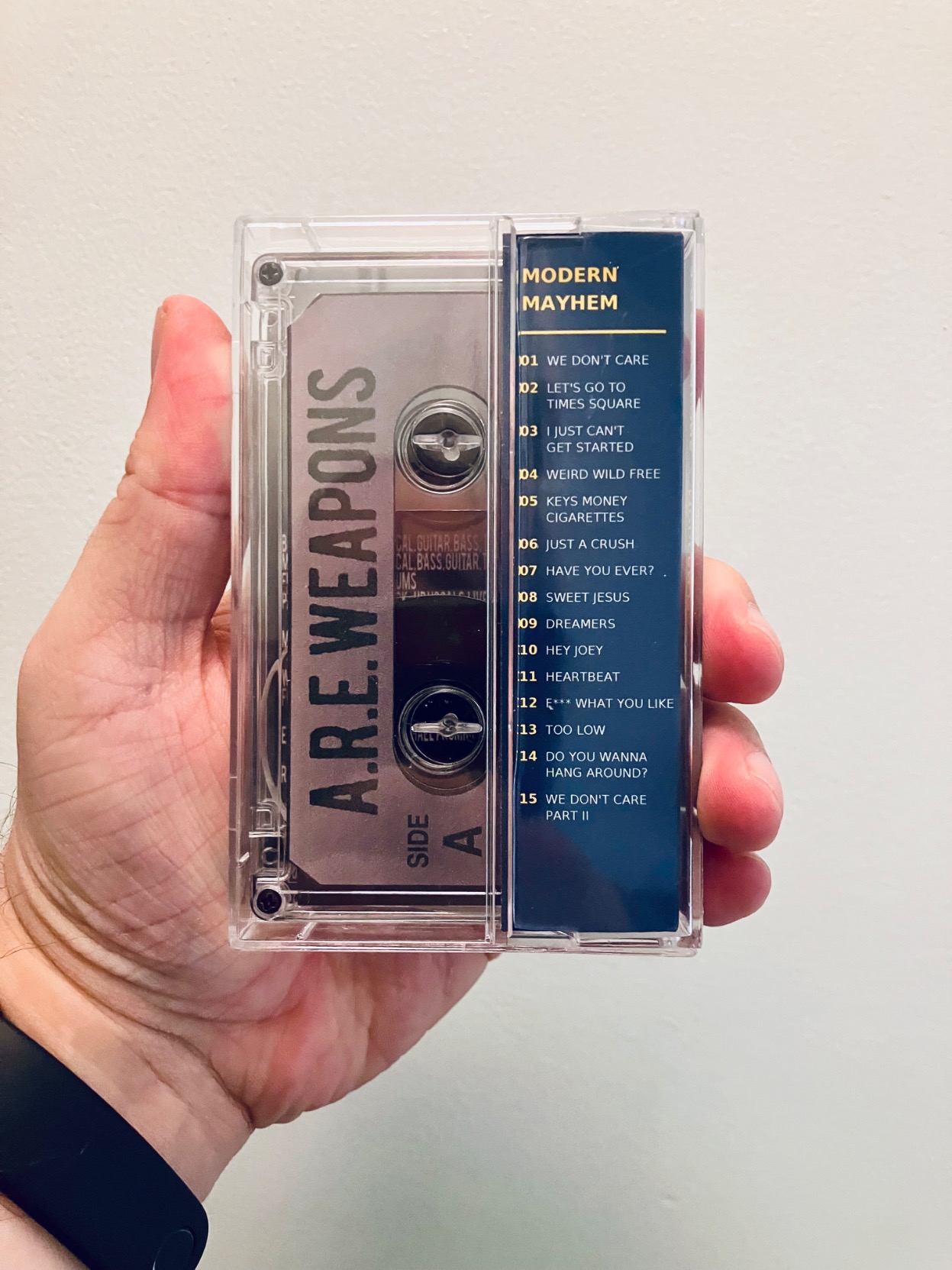
And in 2007, that’s when they released Modern Mayhem. Every song on here is good. Not a single dud.
Top to bottom, this is a superb punk album.
The humour is back with “Let’s Go To Times Square”. The straight up garage rock of “Weird Wild Free” feels happy. And this is contrasted with the despondence and frustration of “Have You Ever”?
Out of the limelight, how did I even discover this after giving up on the band? On a lark, I did a search for them on YouTube after remembering the Pitchfork reviews. And I came across the music video for “F What You Like”:
https://www.youtube.com/watch?v=07LharxRKF4
And this made me remember what I liked about A.R.E. Weapons in the first place, back when I first hear about Ayler’s Angels and had dreams of making it out to New York—which I eventually did.
Away from the glitz and the sleaze, these guys were just trying to make good, honest punk with synths. Without shenanigans, that’s what they do. It became one of my favourite punk albums ever.
I immediately bought the album on iTunes, one of the first albums I’ve ever bought off iTunes too because you couldn’t even find the album in stores or even on BitTorrent. Totally worth it. I still hear it to this day.
I’ve longed for a physical edition. Yet I never felt that a CD was a good aesthetic choice for this album.
But what do I think is a good format? A Type I cassette, which perfectly complements the guitars-and-synths sound.
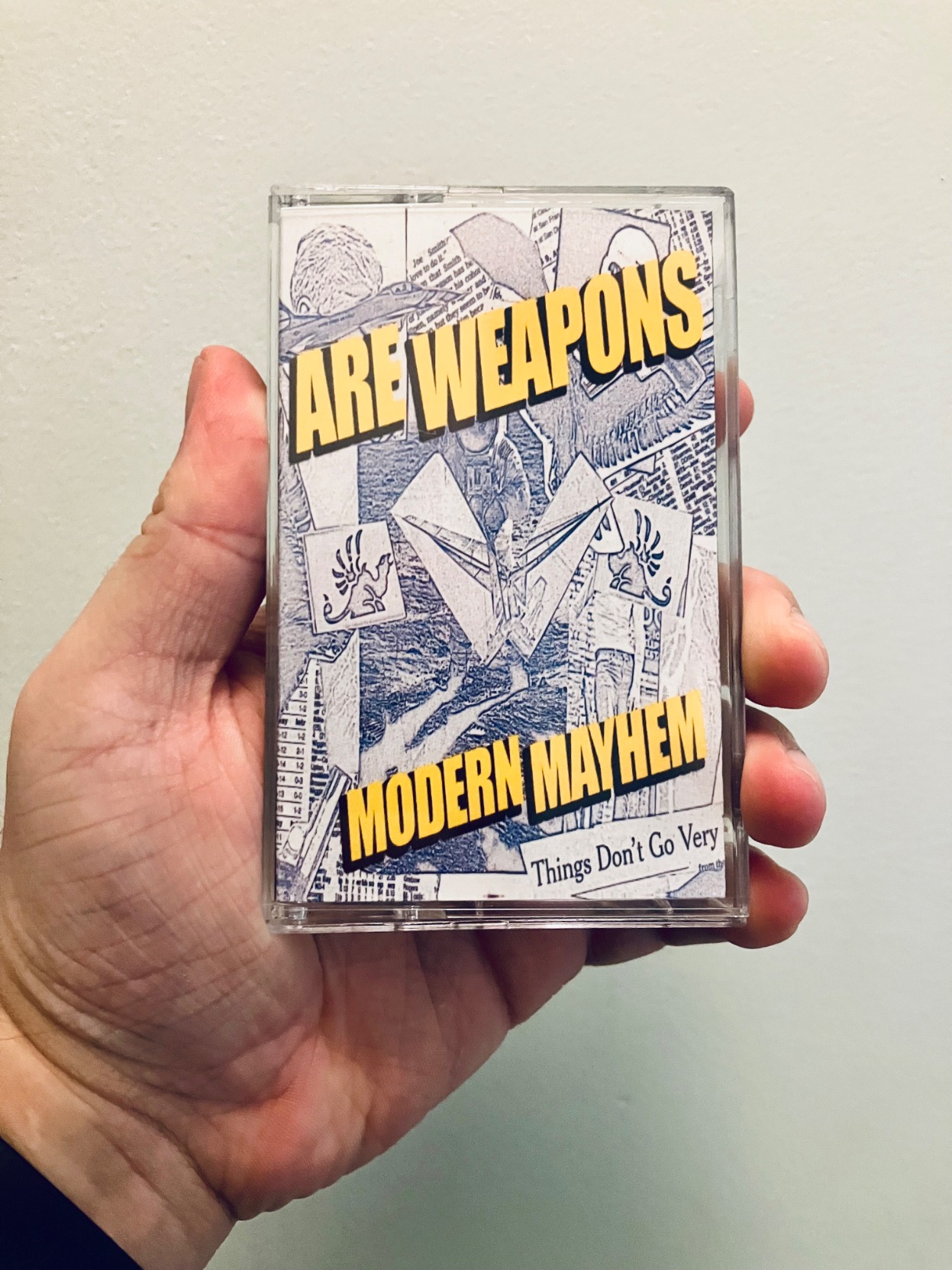
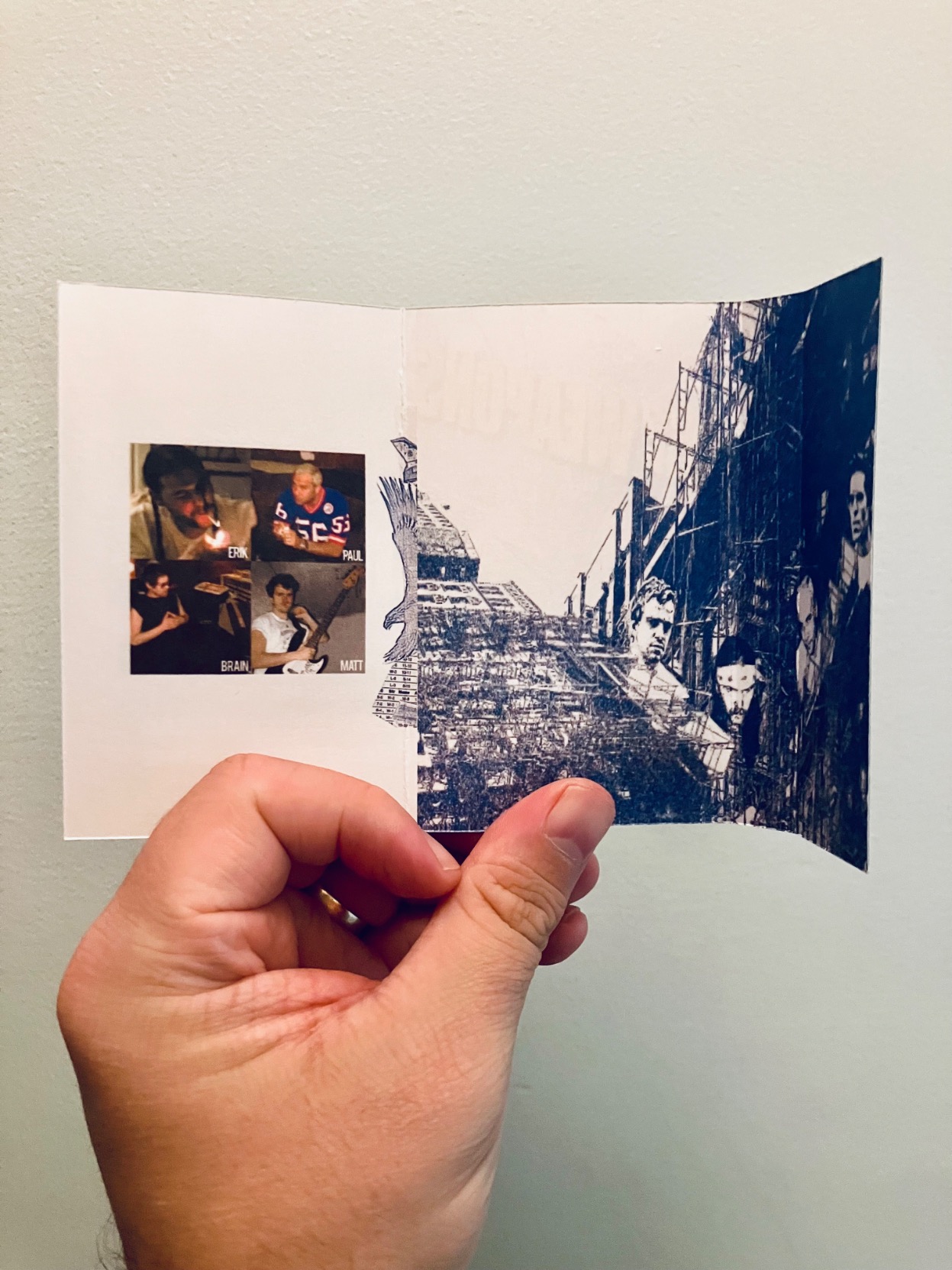
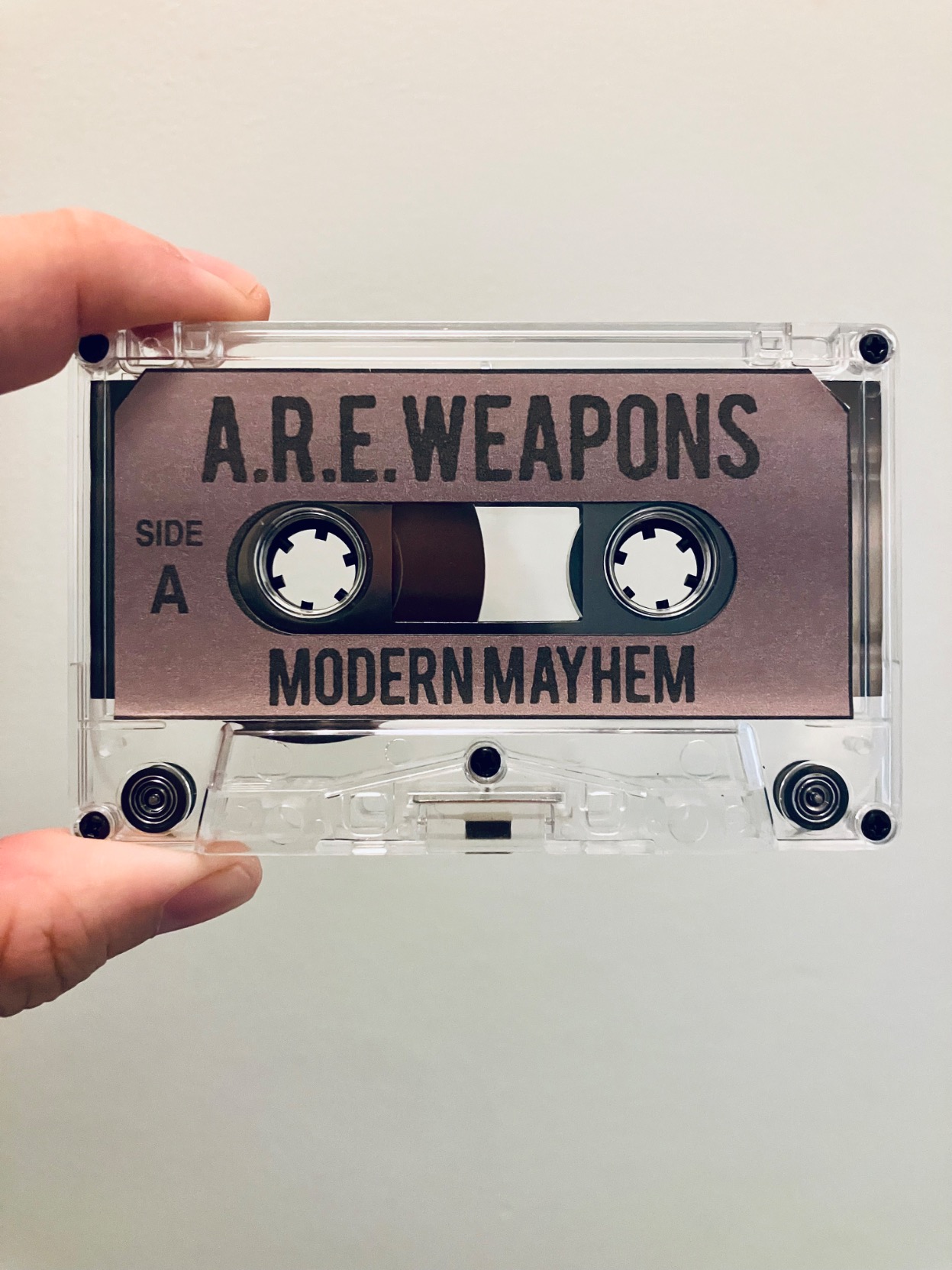
So I made it myself. Recorded it with Dolby S, fit on a clear C43.5. I formatted the original artwork for a four panel J-card, sourced from the original packing shown on Discogs. Add for the label, that’s supposed to be reminiscent of the original disc, though unapologetic about being a paper adhesive printed with an inkjet.
This is a 1-of-1, one-of-a-kind physical media, made just for me.
A momento of one of my favourite punk albums ever. When I was a teenager, I couldn’t have something like this. But now I record in the form of my choosing.