I love The Economist and I don’t necessarily disagree with the thrust of this we...
Ciaran Martin @ciaranmartin@infosec.exchange
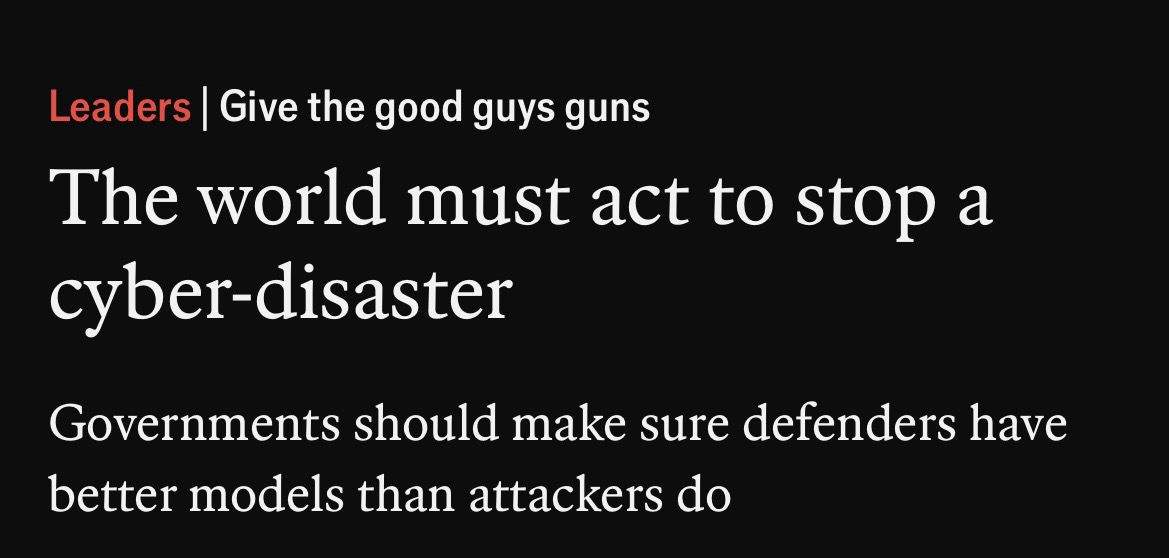
I love The Economist and I don’t necessarily disagree with the thrust of this week’s leader that access to better cyber defence tools should be widened.
But I’m afraid their characterisation of the threat reminds me of this (in)famous cyber induced mushroom cloud cover from the same publication way back in 2010 on the mass casualty cyber apocalypse that never happened and was never going to.
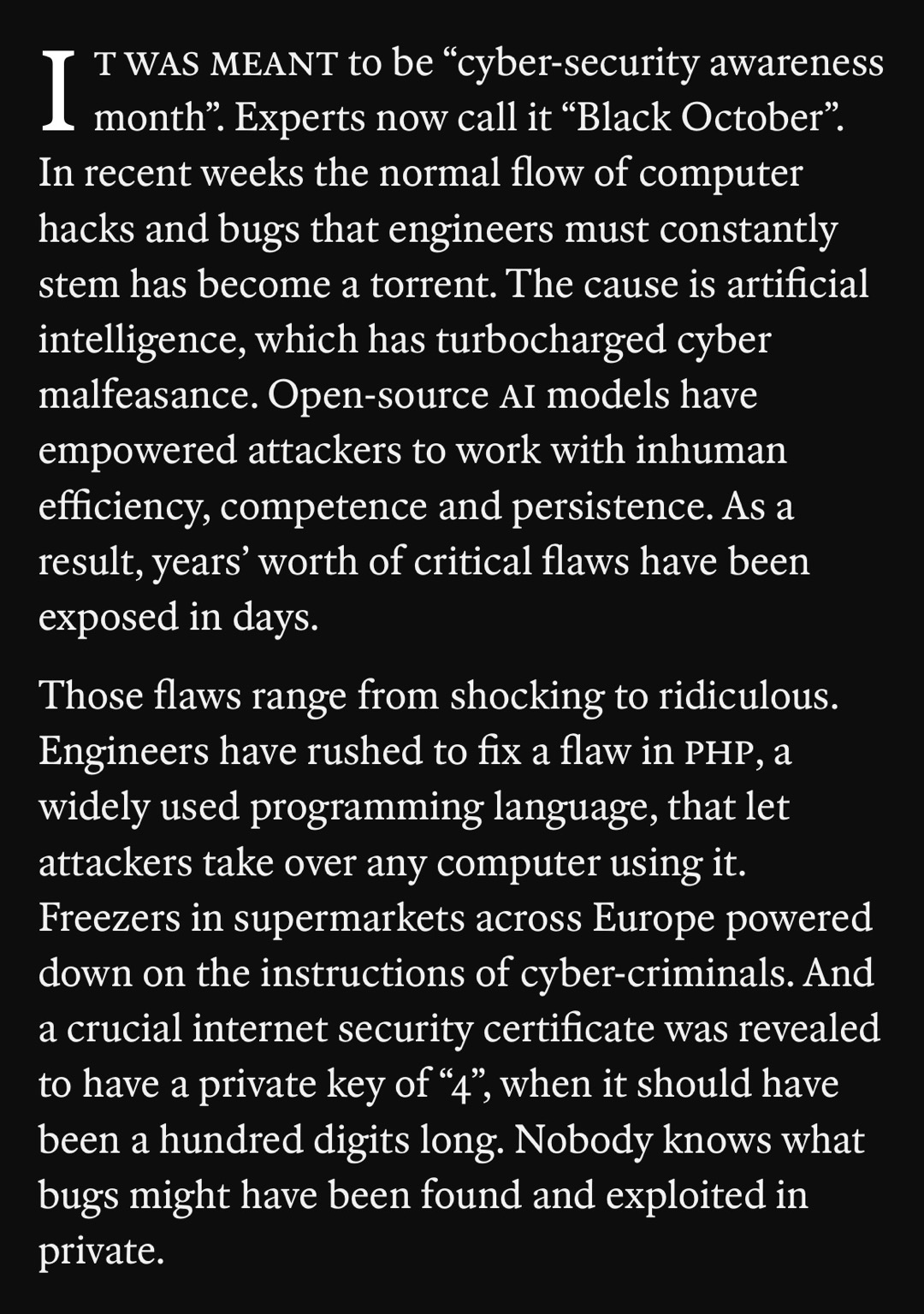
In particular, the reference to the European fridge attacks in the screenshot below is really muddled. For a start, there is no available evidence the attack had anything to do with AI capabilities and could have happened at any time in the many years these things have been connected to the internet. Moreover, no one seems to know who did it but the least likely suspects are the ones mentioned in the piece - cyber criminals. They’re the least likely because no one tried to make money out of this attack which is the only thing cyber criminal groups exist to do.
Cyber security in the age of AI is a difficult and complicated challenge involving a mix of serious old and new risks where details really matter if we’re to get this right. Generic panic spreading based on flawed analysis like this doesn’t help. Sadly it undermines a cogent set of recommendations with which I have some sympathy.
Rant over. Will now get back to writing the epilogue chapter of my forthcoming book. The title of the epilogue is “The Hunt for Black October”. Many AI doomers - a sector who’ve shown remarkably little familiarity with how cyber security works over the past few months - describe last month in those terms. Contrary to this piece however, I know very few, if any, cyber security experts who do.