We're currently experiencing a heat wave, so many people switch on their aircond...
Emil Jacobs - Collectifission @collectifission@greennuclear.online
We're currently experiencing a heat wave, so many people switch on their airconditioning in order to keep cool. This results however in spikes in electricity costs.
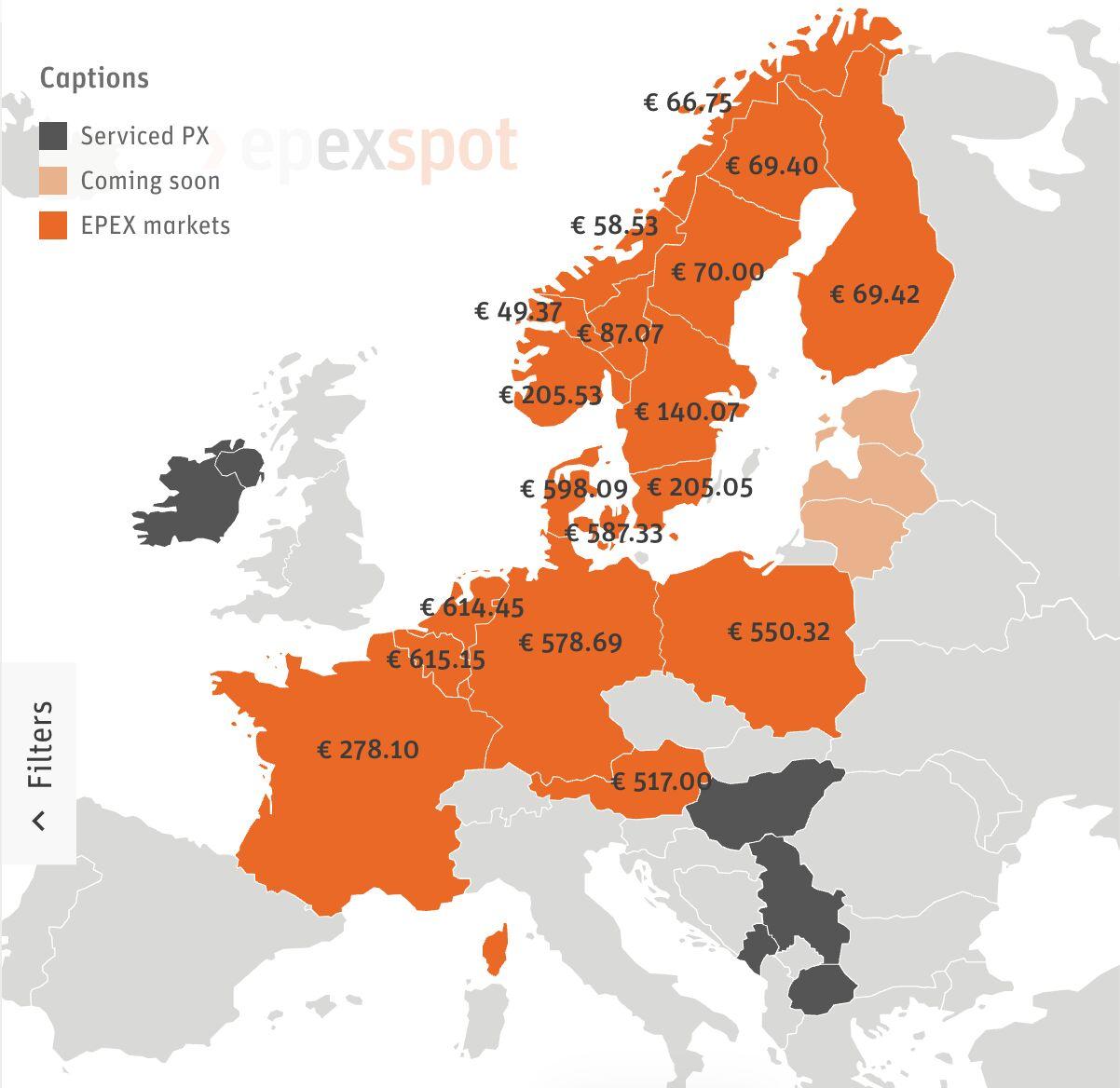
How high? As per epexspot.com the electricity prices will surge tomorrow to over €600 per MWh (that's €0.60 per kWh!), see the second map below. Granted, this is between 20:30 and 20:45 CEST, but for those on a flexible energy contract, these days can be quite expensive!
This is a direct result of our reliance on wind energy, a phenomenon that is expected to grow more extremely as we build more wind parks. Why is that?
Below is also a map from meteoradar.co.uk showing the expected wind speed across Europe tomorrow afternoon. It's the first one. You'll see that the map is quite blueish. This indicates low wind speeds. Therefore it is expected to result in low wind energy yields.
The reason for this is pretty straight forward. Meteorological high pressure areas like we're in now, tend to "push out" the air to low pressure areas. Low pressure areas have high energy winds that we can use for electricity generation.
The Germans invented a word for these lulls: dunkelflaute. This indicates a time in winter when it's both dark and not windy. But the lack of wind can also happen during summer obviously. Across the continent.
I ask your attention again on the second map. You'll see some interesting variations. Sweden for example has a very cheap northern part and a very expensive southern zone. The Benelux countries are topping the map at above €600. France is much lower at below €300.
The culprit here are a mix of things at interplay, but at the center is Germany essentially sucking the European grid dry, thereby letting prices rise. A second thing is that when renewables fall short, fossil gas (or I guess in Germany lignite coal) needs to fill the gap. Since these only run for short spurts but then be at standby all the time, they're very expensive to operate.
Since all of the orange area operates as one grid, demand in Germany has a direct influence on prices in neighbouring countries. This is exactly why Sweden and Norway opted to divide their country in several zones, each with their own price, so it's not all of Sweden that has to pay astronomical prices whenever the sun isn't shining or the wind not blowing, yet Germany's energy hunger continues unabated.
I know we designed it this way, but it feels like a serious design flaw to me.