Why #AI sucks, illustrated with a simple and innocent example: I was looking for...
France Jor☝️:blob_disapproval: @jor@eldritch.cafe
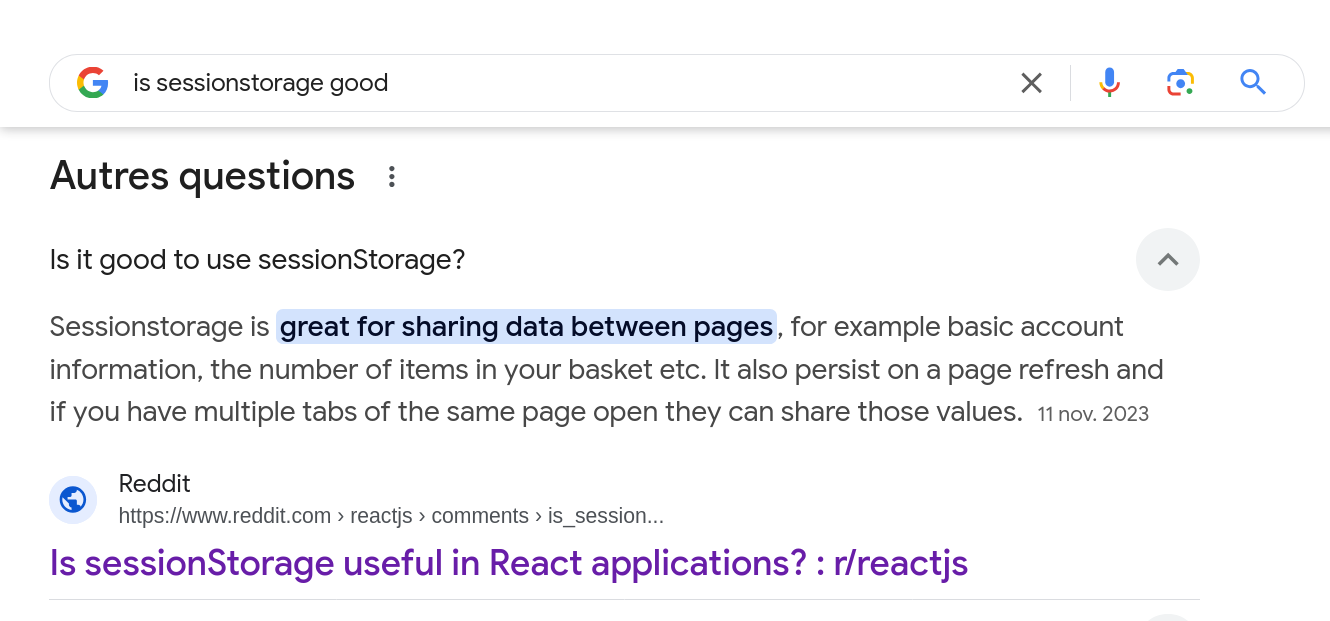
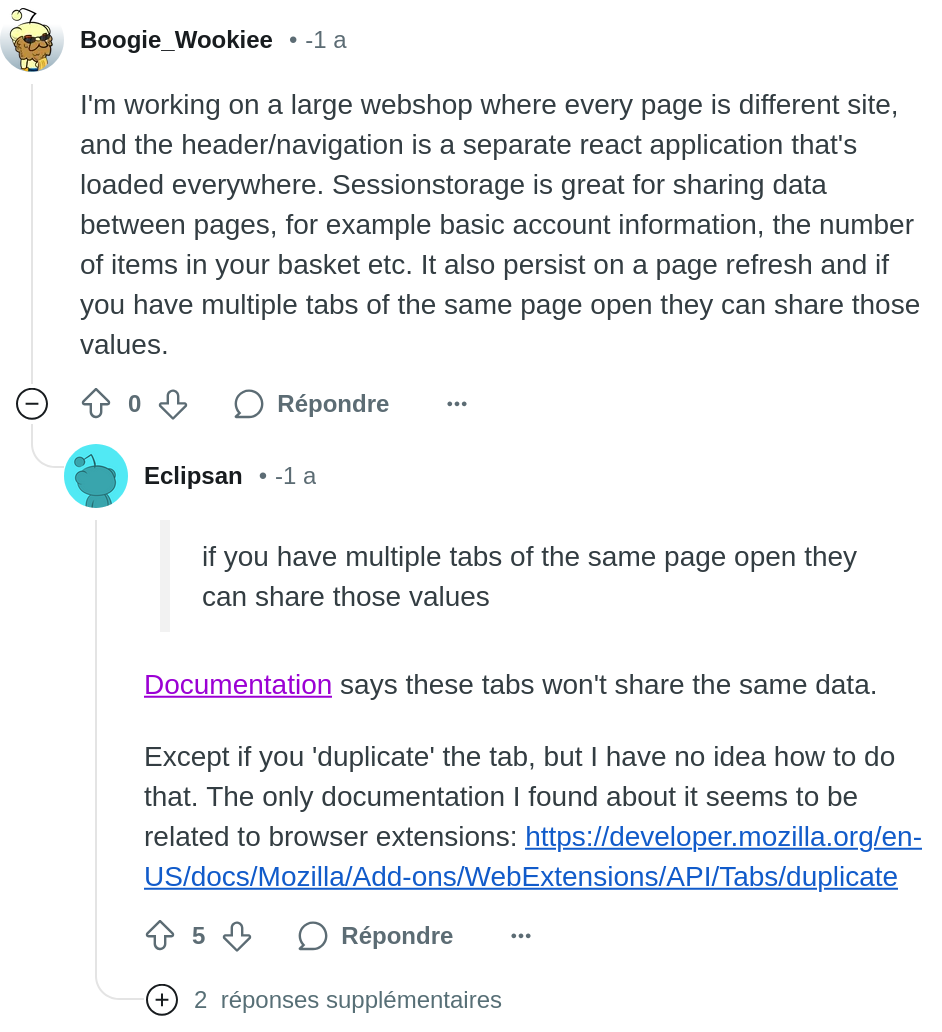
Why #AI sucks, illustrated with a simple and innocent example: I was looking for technical documentation (about the sessionStorage object, a web technology that is used to persist data across page reloads in the same tab), and Google AI “summarized” a web page about the feature by taking an erroneous citation (which pretends that it allows to share data between different tabs, while it does not), although the page itself contains more than enough information to understand that it is false. The extract, however, does not contain that information. 😬
(see screenshots)
That’s because “AI” does not understand anything. It just generates tokens (ie words) that are likely given some prompt.
In this example, I guess that the reason this particular extract has been selected is because it contains “sessionStorage is great”, which is a likely answer to the suggested question “Is it good to use sessionStorage?”
Now this example is “innocent” because its possible consequences are limited. That is just a mistake in the summary of a technical API documentation for a feature that is most likely not critical.
Had I believed the erroneous summary, the worst that could have happened is that people using my website in multiple tabs would have lost some data, which would most likely be reported as a bug at some point and fixed. The most likely outcome is that a few hours of work would be wasted debugging an easily avoidable bug, but nothing worse than that.
But what if the false or misleading information could damage important things, or was critical?
What if the user asked for a command line tool to do something, and got a destructive answer? Like the example I saw here where an AI listed /bin/rm as an “XML parser”. 🙄
What if the user had asked for a recipe, and got one that was dangerous? Glue in the pizza, anyone?
You think those mistakes are “obvious”? Maybe.
But what if they weren’t? What if the misleading information looked genuine?
Would you have spotted the error in the summary for sessionStorage? Probably not, even if you have a technical background. I certainly wouldn’t have spotted it if I had not known this specific API beforehand, enough at least that it triggered a warning and made me double check.
So, what if the user had asked to identify poisonous mushrooms, and got a misleading answer which looked genuine?
What if the user had asked what to do in a life threatening emergency situation, and got a wrong answer that looked like it was genuine? 😬
The worst kind of false information is the one that looks genuine, and that is what the AI is trained to produce, because it understands nothing of the huge amount of data it is “trained” on, and understands nothing of the answers it itself produces. And this cannot be improved, by design, due to the way it works.
And even if it only gave wrong answers extremely rarely, 1% of the time or less, it would actually be worse, because the 99 first times when it gave us “reasonable” answers, it simply trained us, its users, to trust it blindly and believe whatever it says.
This only makes it more dangerous. 😬