Lots of people (and I am definitely not excluding myself) try to sell something ...
Jürgen Hubert @juergen_hubert@mementomori.social
Lots of people (and I am definitely not excluding myself) try to sell something on social media - their products, their political causes, their creative work, and so forth. We frequently see online personages who have "made it" - they have massive fandoms, and their posts are shared widely. Yet the online ecosystem is supported by vast numbers of people who might dream of "making it to the top" - but for statistical reasons, the vast majority will never make it there. There is only so much online attention to go around, after all.
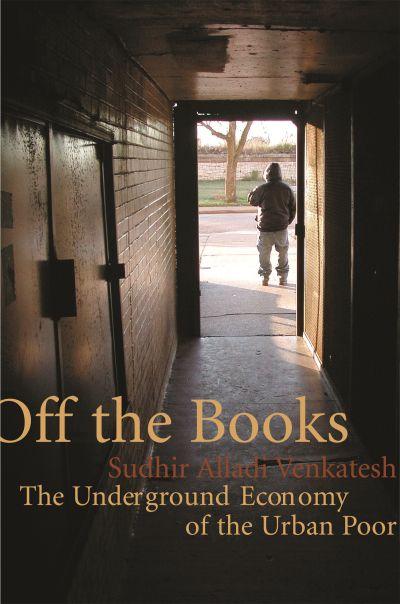
This is called the "tournament principle", and it doesn't just apply to online stars, but also to diverse career fields such as professional soccer, the music and movie industries, street gangs, and the academic career path. In each case, the people who have made it to the top are supported by vast numbers of people who might hope that they will also reach the top some day - but there are only so many top-level positions in each field, and thus the vast majority of challengers will fail.
So, the odds of becoming one of those rare online superstars in whatever niche you have chosen for yourself are bad enough. But as the #enshittification process described by @pluralistic describes so vividly, the commercial social media platforms - #Facebook , #X , #TikTok , #Instagram and so forth - have made the situation even worse via their #algorithm .
First there is the gambling aspect. The algorithm randomly boosts some posts and makes them more visible in the feed so that they can "go viral" - which makes other users believe: "Maybe one of my posts will become viral, too!" Which keeps them engaged on the platform and encourages them to post more content, which allows the platform to sell more advertising space (and, these days, gives them more fodder to feed into their #LLM models).
Secondly, the commercial platforms encourage you to spend money to make your posts more visible - effectively turning them into your own personal ads. This is rather prevalent - I am in a Facebook group for self-published authors, and a surprisingly large portion of the posts is about the optimal social media ad strategy.
Now, the #Fediverse doesn't really have an "algorithm" as such, and thus has a much more level playing field for all participants. Of course, the downside of the Fediverse is that the total number of users is much, much smaller than on the large commercial platforms, and thus your "potential reach" is smaller. Still, since there is no algorithm that actively works against you, the _effective_ reach you can achieve with typical engagement might be higher.
Of course, none of this means that you _have_ to engage with the "attention economy" of social media, on the Fediverse or elsewhere - the vast majority of social media users engage for fun, or to get information, or to converse with people with the same interests. But if "getting attention" _is_ something you are after (and considering that we all have to make our living in this late-state Capitalist hellscape, I am not going to judge anyone for that), you should know what you are working with.