On a recent Linux-based Incident Response case, we found a dropped GSocket binar...
Stephan Berger @malmoeb@infosec.exchange
On a recent Linux-based Incident Response case, we found a dropped GSocket binary as a persistence mechanism [1]. The threat actor planted the dropped binaries under user-space directories to blend in, specifically masquerading as legitimate system processes:
./.config/dbus/php-fpm
./.config/htop/defunct
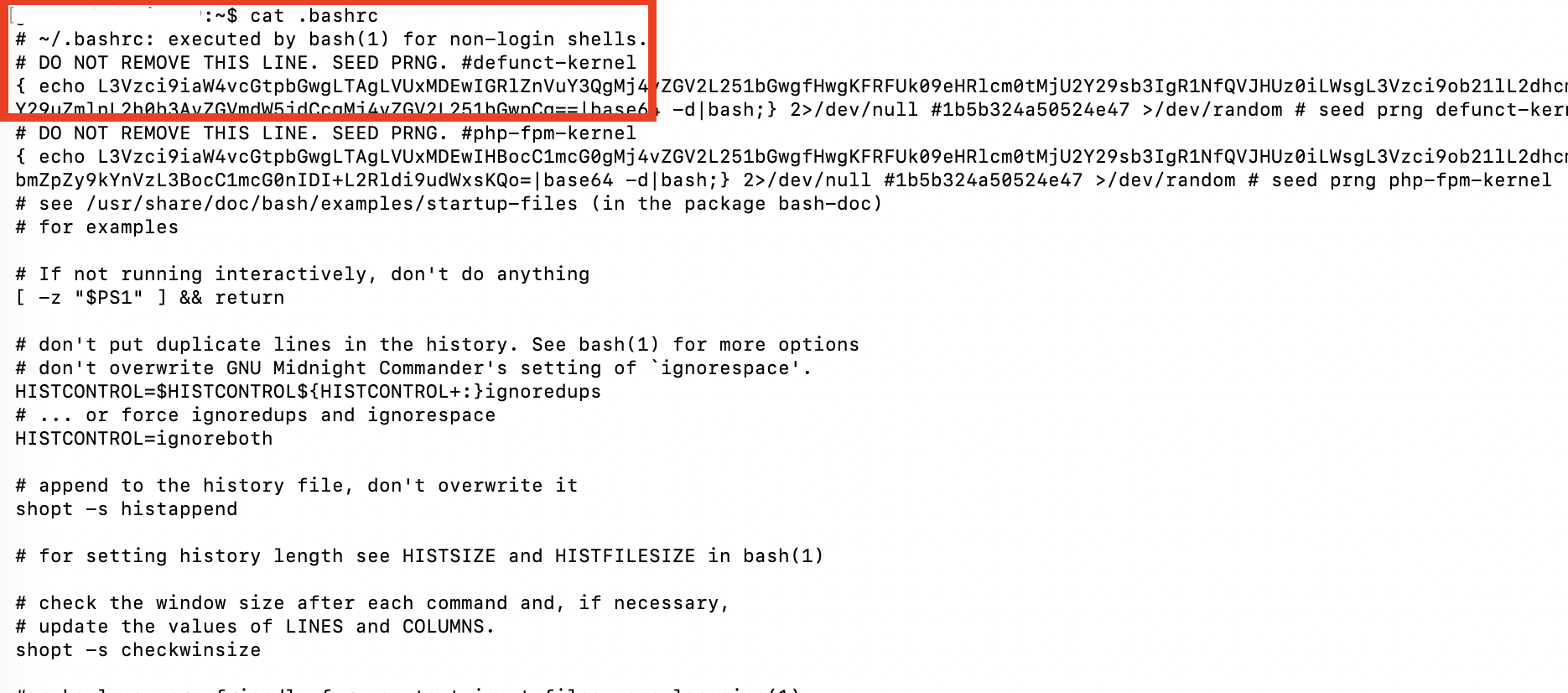
Persistence was established via standard execution vectors, either triggered through cron entries or embedded within profile startup scripts (.bashrc / .profile).
The "echo large-base64-blob piped to bash" is not really hard to miss (see image), but I had to laugh about the first line: DO NOT REMOVE THIS LINE. SEED PRNG. :)
As this was an older compromise, I took the secret from another file planted next to php-fpm (called php-fpm.dat, holding the secret) and tested the reverse shell locally using gs-netcat -s <secret_from_the_dat_file> -i, which gave me shell access under the user who started gsocket in the first place.
Global Socket is a pretty cool project, and the website goes to great lengths to explain the various scenarios. You might want to hunt for these binaries on your Linux fleet :)