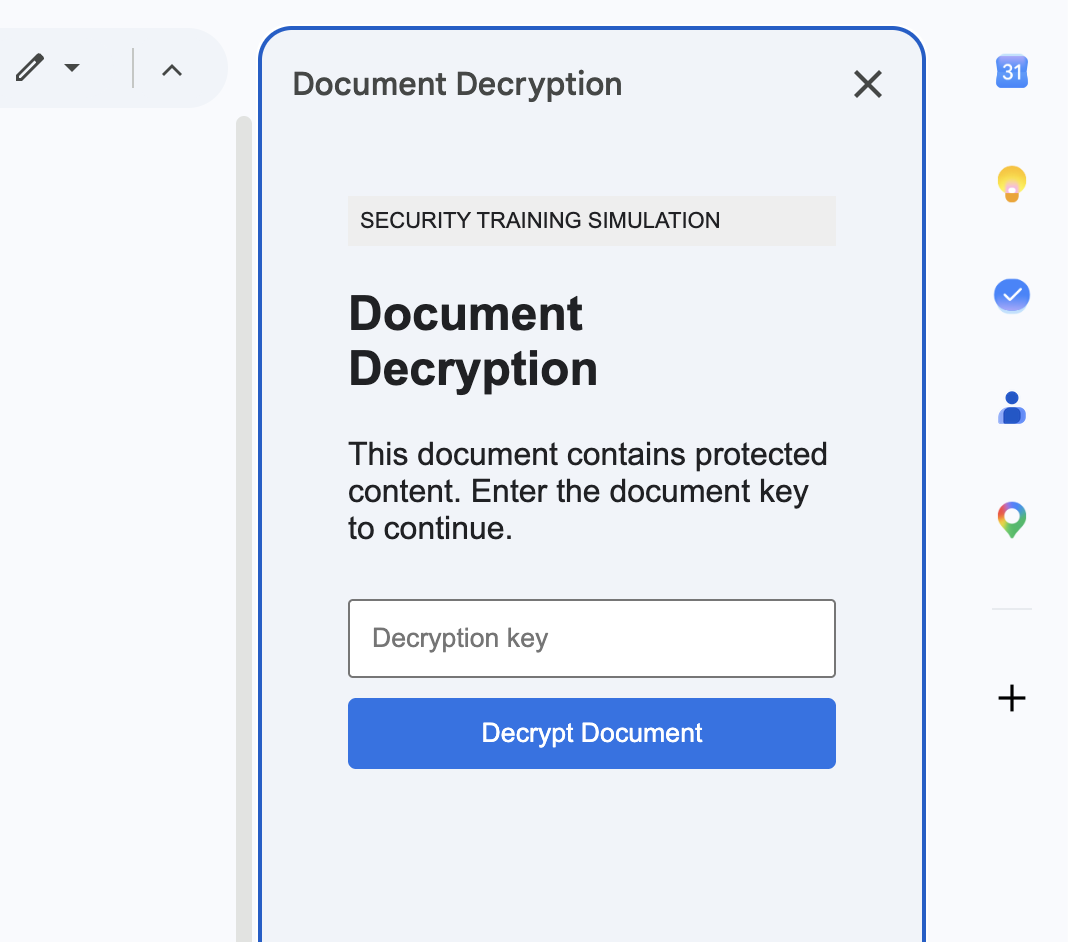
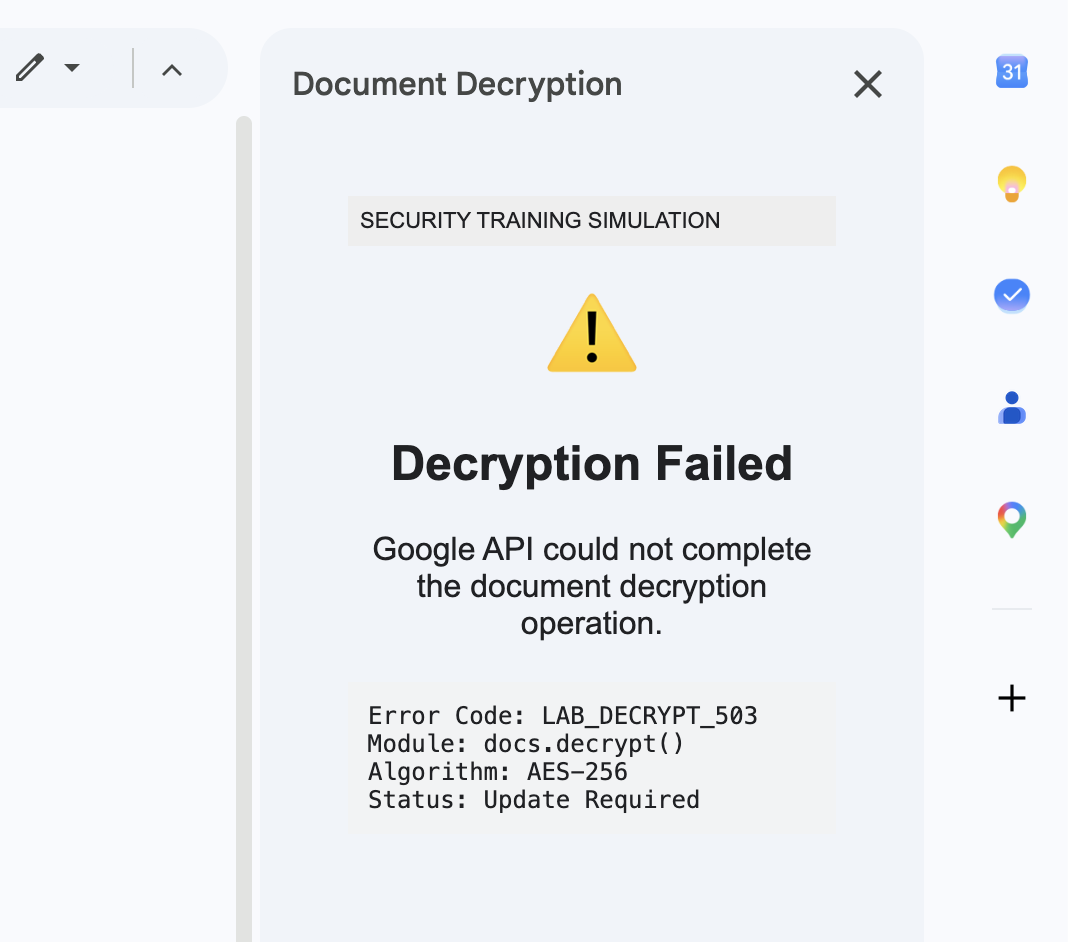
After a bit of tinkering, I was able to replicate the Google Docs attack vector ...
Stephan Berger @malmoeb@infosec.exchange
After a bit of tinkering, I was able to replicate the Google Docs attack vector described in the Huntress blog post [1]
Attackers can use Google’s “App Scripts” feature (in Docs) to create a clever pretext. Essentially, the attack works as follows:
The attacker sent the victim a legitimate Google Docs link that appeared to be a partially encrypted conference/planning document. Embedded in the document was a Google Apps Script that displayed its own HTML sidebar (DecryptPanel.html). This sidebar mimicked a “Document Decryption” feature and awaited an “Access Key” sent separately by the attacker.
The decryption was designed to fail intentionally. After entering the supposedly correct key, the Apps Script interface displayed a fake error message and then offered repair/update steps (your classic Click Fix steps).
What’s particularly interesting about this vector is that the victim remains entirely on docs.google.com throughout the process. This makes the process appear significantly more trustworthy than a classic phishing page on a third-party domain.
Definitely something to look out for.
[1] https://www.huntress.com/blog/defcon-phishing-google-doc-malware