My new "field note" shows how a seemingly generic Microsoft Defender alert can l...
Stephan Berger @malmoeb@infosec.exchange
My new "field note" shows how a seemingly generic Microsoft Defender alert can lead to a much more useful forensic finding when correlated with filesystem artifacts.
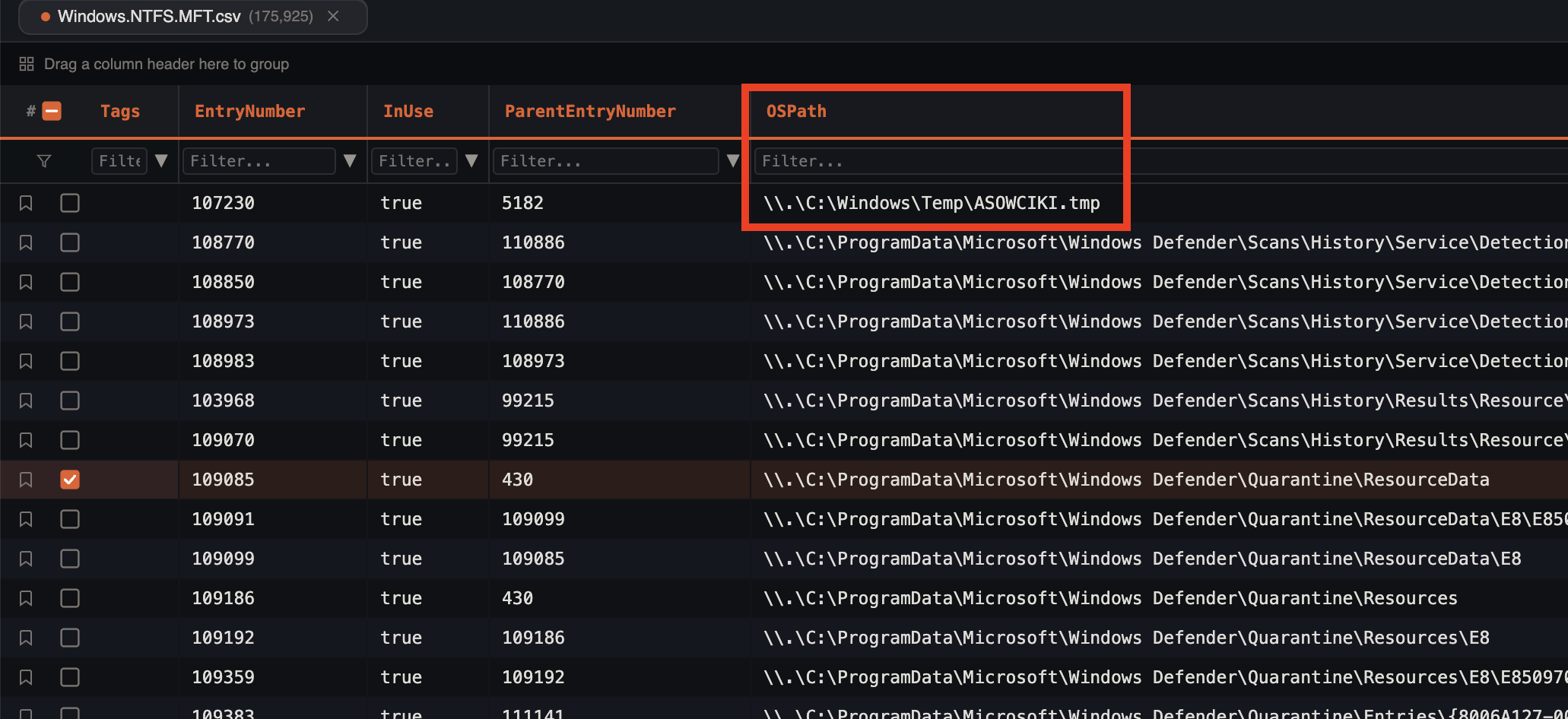
Defender detected Behavior:Win32/RegDump.SA, attributed to svchost.exe running as SYSTEM. Looking at the MFT around the alert timestamp revealed a suspicious temporary file (see image). Its "regf" header identified it as a Windows Registry hive, and loading it confirmed that it contained a partial SAM hive.
Impacket’s RemoteOperations implementation creates temporary hive files using eight random ASCII characters followed by .tmp. This makes the artifact highly consistent with an Impacket-style secretsdump workflow.
Correlating the alert timestamp with MFT activity can expose the underlying attacker technique, or at least hint you in the right direction.
Full article here: https://dfir.ch/posts/field_notes_av_impacket/