There are a lot of things to be said about big companies scanning books and givi...
mnl mnl mnl mnl mnl @mnl@hachyderm.io
There are a lot of things to be said about big companies scanning books and giving nothing back, but as with energy and water costs of genai, people seem to shut off their brain and push hyperbolic hot takes which mastodons “no algo, just boosts”-algo just plasters around the timeline.
Copyright is one of the big reasons why these companies (and google has been doing this for decades at this point) have to pull books after scanning. Similarly, as someone who regularly scavenges library dumpsters for rare books, you have no idea how much gets pulped everyday by libraries.
I am all for having the resulting scans donated to the web archive, and having companies scanning for profit put the metadata and things like the TOC online (like with the deletion clause of the gdpr, that shit is actually not easy to do and requires a more thoughtful approach to the process), and the scanned results to research and nonprofits, because that is giving back.
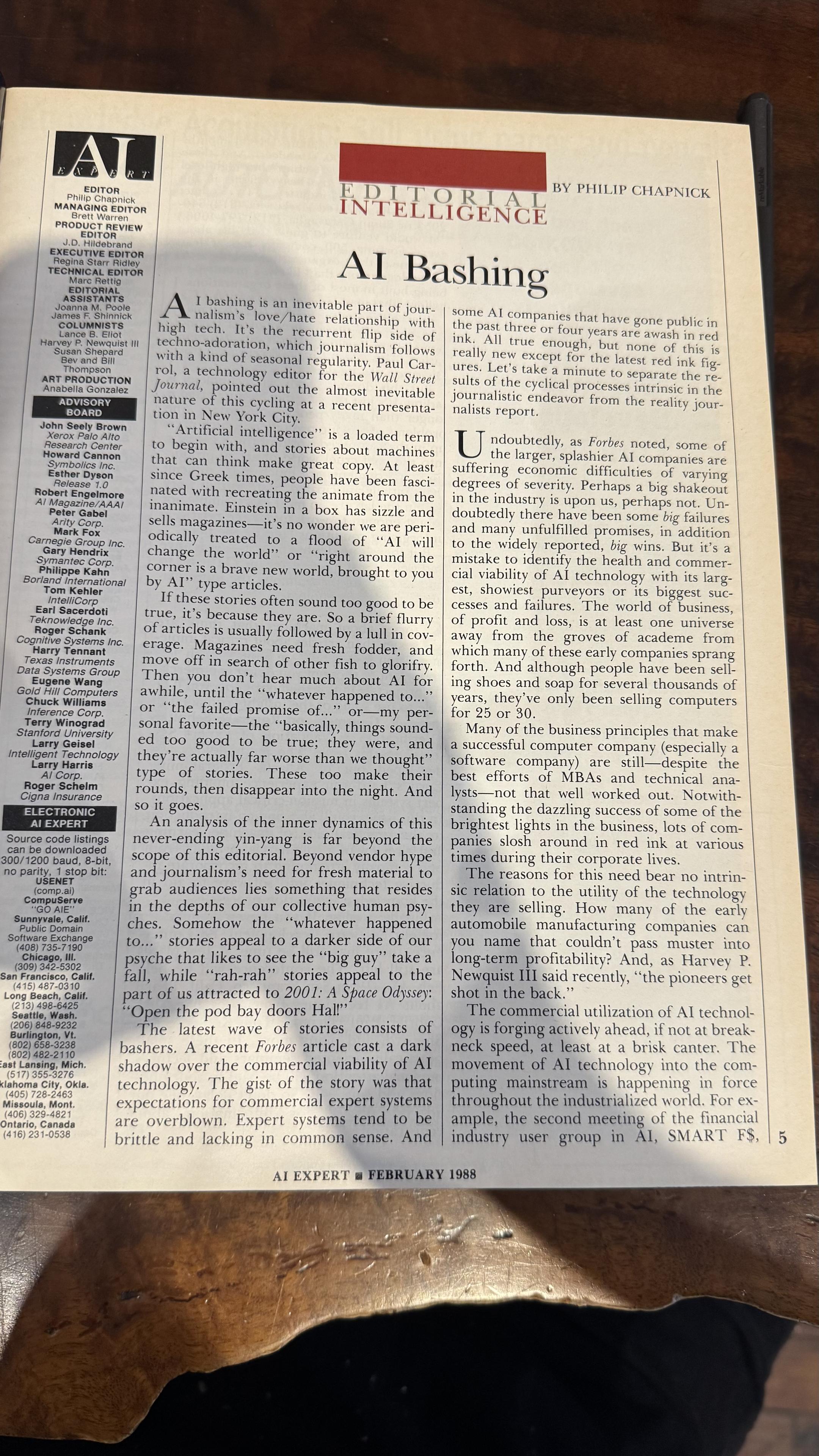
If you want to contribute to the effort, go scavenge your local universities and libraries dumpsters (heck you might want to befriend librarians who could give you “hints”), and if you feel like it, scan the results. You can put up alerts on abebooks and Amazon and eBay to snatch rare books and magazines (old magazines are fascinating) and snipe them for a few bucks. Here’s one of my “ai expert” magazines from the 80ies 😂
Another thing you can do is cleanup the 200MB PDFs on web archive using OCR, local models these days are pretty awesome for turning bitmaps into much more usable and accessible documents. This works for the many scanned thesis and papers from before latex. I am happy to share my personal jank tools.