Went through my notes. Since 2005 I’ve used or tested 19 browsers: Opera, Firefo...
Rolle Laukkarinen @rolle@mementomori.social
Went through my notes. Since 2005 I’ve used or tested 19 browsers: Opera, Firefox, Swiftfox, Chrome, Edge, Brave, ungoogled-chromium, Brave Origin as daily drivers, and out of curiosity: IE, Safari, Arora, Epiphany, Midori, Epic, Vivaldi, Min, Floorp, Zen and Orion along the way.
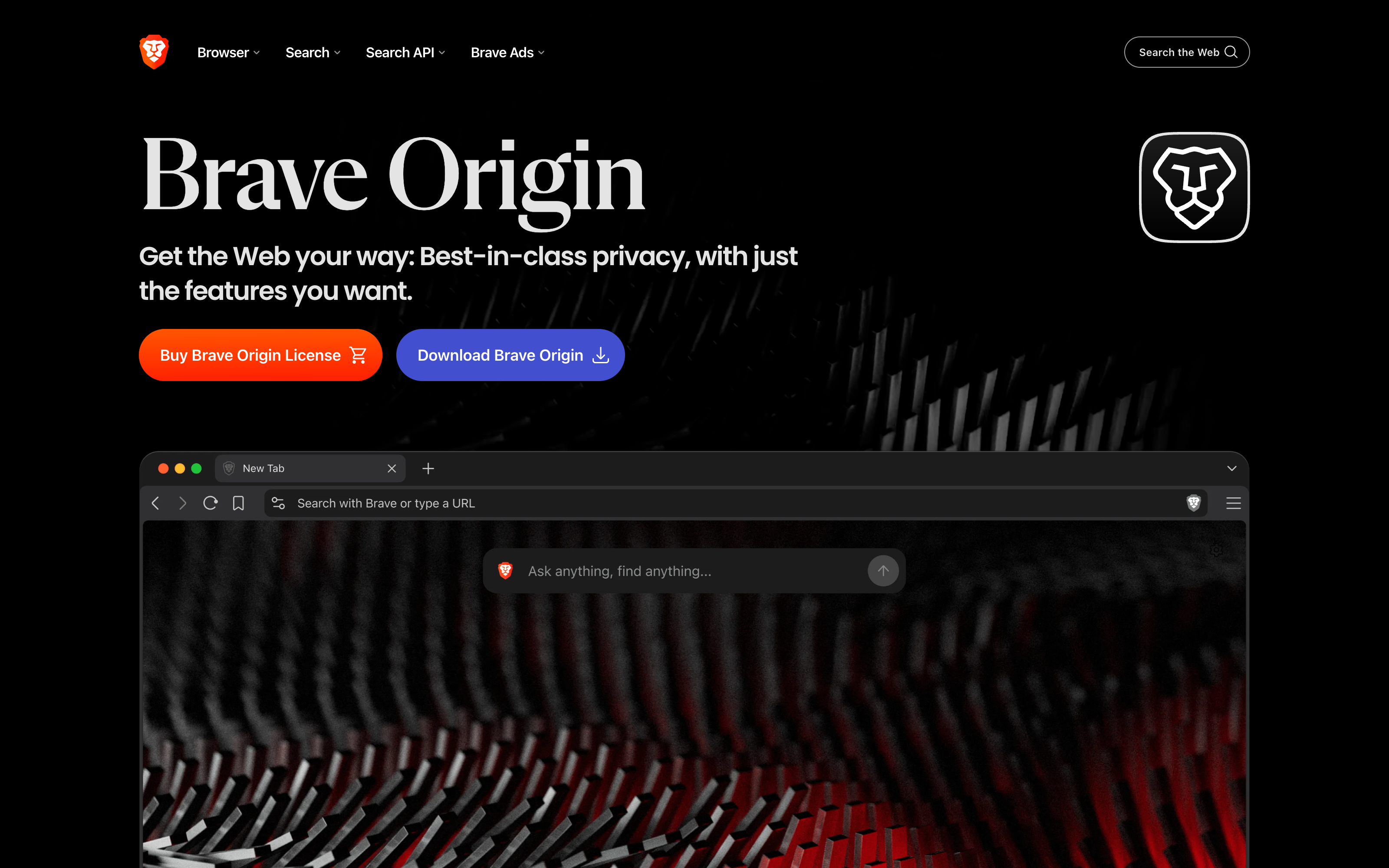
Today I moved back to Brave Origin Nightly from ungoogled-chromium on both macOS and Linux. Here’s why.
ungoogled-chromium clear wins:
- No telemetry and no connections to any vendor, Google included.
- Full uBlock Origin. It still carries a patch that keeps Manifest V2 extensions working.
- Fingerprinting flags for canvas, client rects and WebGL noise.
- Plain Chromium without anything added on top. The best score in Speedometer 3.1 on Apple Silicon: 52.4 against Brave’s 49.2. That’s about 6%, which you can’t really see in daily use.
Inconveniences:
- Updates are manual, and something breaks every time. On macOS every update means copying the Widevine CDM back, re-signing the app and re-granting camera, microphone and screen recording permissions.
- Extensions don’t update on their own without a helper extension. An outdated uBlock Origin is the main reason YouTube breaks.
- YouTube worked badly even so.
- Netflix and Spotify and other DRM-based sites can’t work on macOS at all anymore. Since 2023 Netflix requires a browser signed by Widevine (VMP) on macOS and Windows, and Google doesn’t sign open source forks. I spent an evening trying to solve this.
- Logins reset sometimes when Chromium can’t read its Keychain key, and OAuth windows from other apps open blank.
- Preloading is stripped, so pages never feel as instant as in Brave.
Why Brave Origin fixes these for me:
- Updates are automatic and nothing breaks. Shields handles ads and YouTube’s ad-blocker countermeasures on its own, with filter lists updated automatically.
- Its blocking engine is written in Rust, which I like.
- Netflix, Spotify and Meet work, because Brave is VMP-signed.
- It uses less memory than ungoogled-chromium in every benchmark I found, 23% less in a 15-tab test.
- Brave Origin removes bloat like Leo AI, the crypto wallet, Rewards, the VPN, News and the telemetry (daily ping, crash reports, P3A).
- Fingerprinting is randomized by default.
- The new tab page can be set to a blank page, and Focus Mode gives a frameless, minimal window.
The trade-off: Brave Origin still talks to Brave’s servers for updates, components and filter lists. ungoogled-chromium talks to nobody. For me, a browser that works every day matters more than that last bit of privacy, since everything else is being taken care of. I can work with this.
And before anyone says Firefox or FF based: I have huge issues with its UI and UX. I'm used to bookmarkless browsing, which means I have very little bookmarks and just type a word and hit enter. This doesn't work well in FF. In Chromium I type a word, hit enter and I’m there. DRM-content and YouTube adblocking hit the same constraints in FF based browsers. Brave is the only one that does this well.
#Browsers #BrowserWars #Software #BraveOrigin #Brave #Chromium #UngoogledChromium